Advertisement

Opinion | China’s safeguarding of cultural heritage signals its global ambition
For China, the protection of antiquities is not just about safeguarding objects of its past – it is about defining its place in the future
Reading Time:3 minutes
Why you can trust SCMP
5

China is making its cultural heritage protection a national priority – and a pillar of its global identity.
As one of the world’s fastest-growing art markets, China has taken steps in recent years to better safeguard its cultural heritage, both at home and abroad. From restoring ancient sites to recovering looted antiquities and building museums at a rapid rate, these efforts reflect more than a conservation push. They signal that the world’s most populous nation views the protection of its antiquities as central to its national identity and role on the global stage.
President Xi Jinping has repeatedly emphasised the importance of cultural preservation, making it a hallmark of his governance. Since taking office in 2012, he has addressed the issue repeatedly in inspection tours and key speeches, underscoring that heritage is integral to the “cultural confidence” China is promoting as part of his core ideologies.
Advertisement
This concept – that Chinese culture, values and history are not subordinate to those of other nations but stand on equal, if not greater, footing – reflects a belief that China’s long and complex civilisation is not only a source of pride but also a guiding force for modern life and, increasingly, a tool of soft power.
This vision is taking shape through concrete policy and action. Historic neighbourhoods in cities such as Fuzhou – where Xi famously clashed with developers over conservation – are now protected and undergoing restoration. This shift represents a broader national trend of safeguarding urban cultural heritage in the face of modernisation.
Advertisement
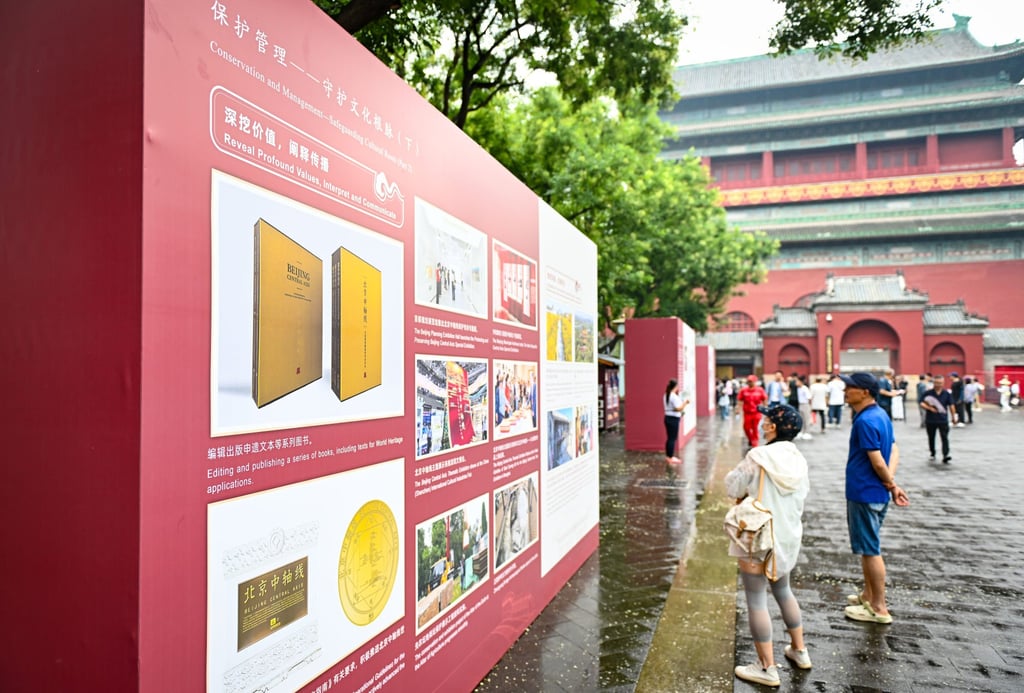
In Xi’s first decade in office, China’s central government allocated over 100 billion yuan (US$14 billion) to cultural heritage protection, more than doubling the number of national priority protected cultural sites and adding eight Chinese sites to the Unesco World Heritage list. China now has the second largest number of World Heritage sites at 60, in close competition with Italy and its 61 sites.
Advertisement
Select Voice
Select Speed
1.00x