Advertisement
Opinion
Battery revolution set to spark Global South’s century of prosperity
The rise of the sodium-ion battery promises to supercharge a green energy transition that will help level the global playing field
3-MIN READ3-MIN
Listen

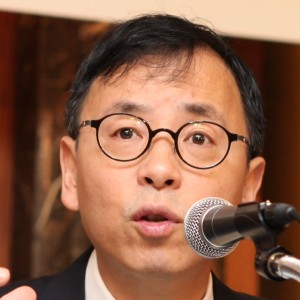
Dr Andy Xie is a Shanghai-based independent economist specialising in China and Asia, and writes, speaks and consults on global economics and financial markets.
Renewable energy is the tech revolution of our time. It promises ubiquitous, cheap and easily accessible energy for all. The rise of the sodium-ion battery is the final piece to make this dream come true. Its low cost and reliable energy storage can make distributed and affordable electrification widely available for everyone across the world.
Chinese firm CATL is on the verge of mass-producing a sodium-ion battery that can charge more than 10,000 cycles, performs between minus 40 and 70 degrees Celsius, possesses an energy density of 175 watt-hours per kilogram and promises to be the safest battery in the world. Its competitors are likely to make similar products. As in other fields of technology, competition will drive the product to higher specs and lower prices.
After lithium batteries using nickel, cobalt and manganese made electric vehicles (EVs) practical, the lithium phosphate ion battery helped slash battery costs and improved safety. The sodium-ion battery is the latest revolution, promising to cut battery costs even further. The widespread availability of the materials required to make these batteries holds the prospect of ubiquitous supplies, while the improved safety metrics and longer effective lifespan make it ideal for energy storage.
Advertisement
The price of photovoltaic solar panels has fallen more than 90 per cent in the past 25 years, with fierce competition driving solar module prices as low as 7 US cents per watt last year. Compared to the cost of sticking with fossil fuels, solar power feels almost free. As storage becomes cheaper and easier to implement, solar power can become the predominant energy solution for the Global South.
Last year, the installation price of wind turbines in China was around 2 yuan (28 US cents) per watt, just one-fifth of the equivalent cost in the United States. Much like solar, wind power is becoming a competitive alternative to coal and other fossil fuels. Cheap, abundant wind power can give countries at higher latitudes that see less sunlight another effective route to diversifying their energy mix away from hydrocarbons.
One of the main bottlenecks in the global energy transition has been the question of energy storage. China has come up with a complex system to help solve this problem, preferring an ultra-high-voltage transmission grid to ensure the availability of clean energy across vast areas of countryside.
Advertisement
Advertisement
Select Voice
Select Speed
1.00x