
Advertisement
Hong Kong society
OpinionHong Kong Opinion
Rachel Chan

Opinion | Silver economy far from enough for rapidly ageing Hong Kong

Promoting economic activities catering to the elderly is welcome, but more must be done to address the issues the elderly and their carers face

Reading Time:3 minutes
Why you can trust SCMP
An elderly woman sits on a stool on the street in front of a fruit and vegetable seller in a market in Causeway Bay, Hong Kong, on December 26, 2024. Photo: Antony Dickson
By 2046, an estimated 36 per cent of Hong Kong’s population will be over 65. The Hong Kong government has announced 30 measures to promote the silver economy. While targeting the consumption power of the elderly may provide a much-needed boost to the economy, it is far from a solution to the mounting challenges posed by our rapidly ageing society.

As a carer for two wheelchair-bound parents, I face daily struggles that underscore the urgent need for a more comprehensive approach to ageing. These struggles are not unique to me but reflect systemic gaps that demand immediate attention. Other cities and countries have tackled these issues with foresight and innovation, and Hong Kong has much to learn from their successes.

Hong Kong is far from being a wheelchair-friendly city. Stairways, kerbs and narrow pathways make navigating urban spaces a daily ordeal for those with mobility challenges and their carers.
Advertisement

Singapore, by contrast, was recognised as one of 10 most accessible cities in the world in a 2022 travel survey. Compared to Hong Kong’s barrier-free access manual, Singapore’s barrier-free accessibility code seems to place a stronger emphasis on universal design principles, seamless connectivity between indoor and outdoor spaces, and the incorporation of assistive technologies as part of its smart city initiatives.
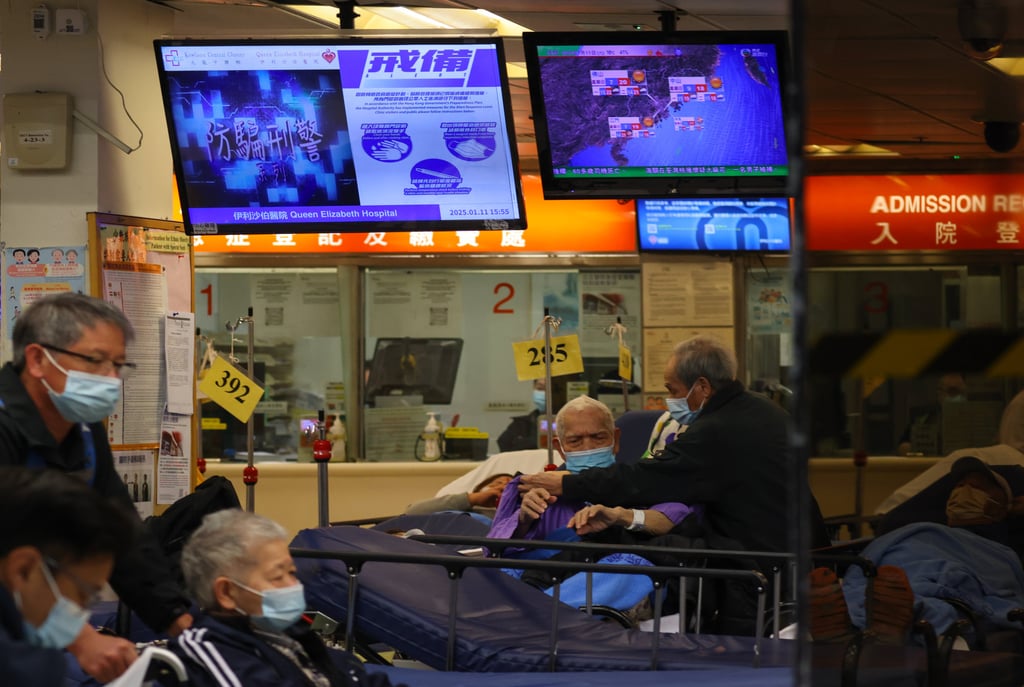
In Hong Kong, the health system also poses significant barriers. Elderly people often require regular medical appointments for chronic conditions, but they face a stark choice between expensive private care and long waits for public services. Outside regular clinic hours, the only option for most people is the overcrowded accident and emergency departments of public hospitals.
Elderly patients at the Accident and Emergency Department of Queen Elizabeth Hospital in Yau Ma Tei during a flu alert on January 11. Photo: Nora Tam

Hong Kong needs to embrace teleconsultations at scale to improve healthcare accessibility. In Asia, Singapore has mainstreamed telehealth in both public and private healthcare systems.

Advertisement
Select Voice
Choose your listening speed
Get through articles 2x faster
1.25x
250 WPM
Slow
Average
Fast
1.25x