
Advertisement
Climate change
OpinionHong Kong Opinion
Ken Chu

Opinion | When travellers think sustainability, make them think Greater Bay Area

The joint efforts of policymakers, businesses and young people can help visitors turn climate action into everyday action

Reading Time:4 minutes
Why you can trust SCMP
Illustration: Stephen Case
Earlier this year, Hong Kong launched its first fully electric ferry. In June, jurisdictions within the Greater Bay Area development zone marked a national event for the environment. Against this backdrop, a quiet but important shift is under way.

Policymakers in the Greater Bay Area are no longer just thinking about sustainability; they are setting it in motion. With the development zone becoming a hub for experimentation in smart infrastructure and climate innovation, the time is ripe to consider a low-carbon tourism corridor linking cities through cleaner and smarter ways to travel.

Guangdong province, Hong Kong and Macau are already renowned for connectivity, with high-speed rail, cross-border bridges and integrated metro systems. But while the physical infrastructure is world-class, the carbon cost of mobility remains high. Tourism, in particular, still leans heavily on diesel coaches, fragmented itineraries and high-emission transfers.
Advertisement

Hong Kong has taken important first steps. The city’s newly launched 400-seat electric ferry is capable of up to 52 daily trips. Trial runs are also under way for a second electric vessel. But the shift to a green tourism economy cannot rest on hardware alone. It must be matched by systems, partnerships and experiences that reflect the changing priorities of today’s travellers.

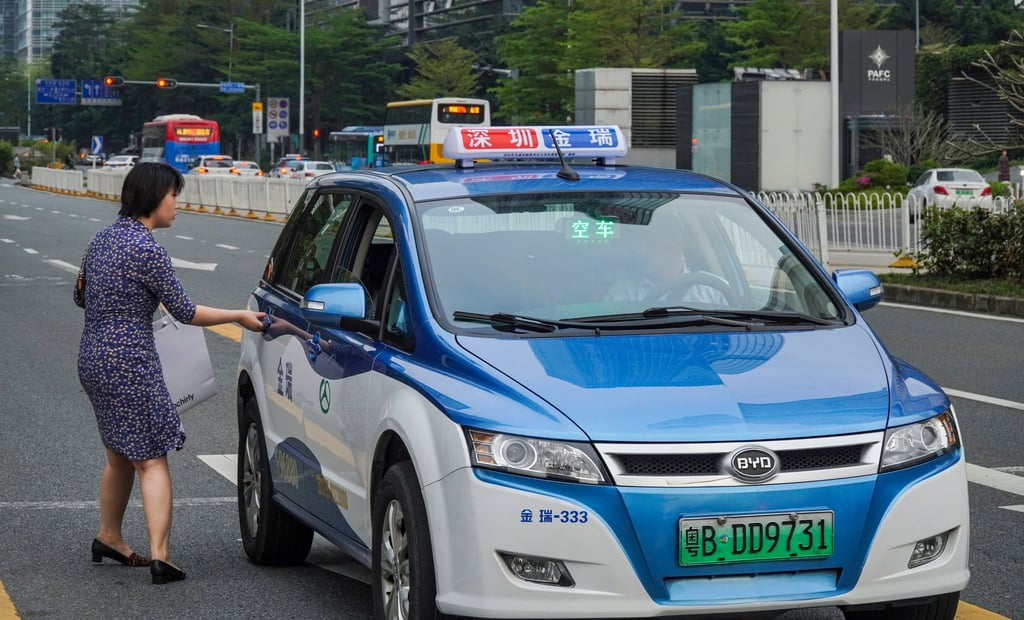
Neighbouring Shenzhen can offer valuable insight into this aspect. As of early this year, the city was home to over 1.3 million electric vehicles (EVs), or 28.6 per cent of its fleet. Shenzhen was the first city in the world to fully electrify its bus and taxi networks. The city boasts more than 370,000 charging stations. This transformation has been built on years of forward-looking and coordinated policy and collaboration between government and industry. The pace of Shenzhen’s progress may not be replicable everywhere, but the mindset is transferable.
Advertisement
Meanwhile, Hong Kong is gaining ground. While nearly seven out of 10 newly registered private cars are electric, progress in public and commercial transport lags behind. Only 1.4 per cent of the city’s 6,000 franchised buses and just 0.5 per cent of its 18,000 taxis are electric. This is a concern given that public and heavy vehicles account for 80 per cent of transport-related emissions, which in turn make up one-fifth of our total carbon footprint.
A passenger boards an electric taxi in Shenzhen, Guangdong province on March 19, 2019. Photo: Roy Issa
Advertisement
Select Voice
Choose your listening speed
Get through articles 2x faster
1.25x
250 WPM
Slow
Average
Fast
1.25x