
Advertisement
Hong Kong property
OpinionHong Kong Opinion
The View
Nicholas Spiro

Hong Kong hotel sector recovery elusive for unprepared investors

An uneven rebound is favouring established operators as tight supply constraints raise the barriers to entry

3-MIN READ3-MIN
Listen
The communal lounge at YOT Hub, located in the Regal Oriental Hotel, in Kowloon City. The youth hostel features 80 rooms for Hong Kong permanent residents aged 18 to 31. Photo: Sam Tsang
Nicholas Spiro is a partner at Lauressa Advisory, a specialist London-based real estate and macroeconomic advisory firm.

Signs of recovery in Hong Kong’s real estate industry are becoming more apparent, so much so that key indicators in parts of the sector are experiencing some of the fastest growth rates in the Asia-Pacific.

In the hotel market, average daily rates, which were declining in annualised terms for most of 2025, grew 9.5 per cent in the first half of this year. This was the third-fastest growth rate among 14 leading markets across the region, according to data from CBRE.
Another sign that the recovery has taken hold is the sharp increase in tourist arrivals which, according to a report by Citigroup on July 21, are expected to reach 55 million this year. This would be almost on par with the number of visitors in 2019, although still significantly below the 65 million in 2018, just before Hong Kong suffered a succession of domestic and external shocks.

This makes the performance of its luxury hotels all the more impressive. According to data from STR, part of CoStar Group, average daily rates for luxury and upper upscale hotels in the first half of this year were 1.3 per cent higher than in the corresponding period in 2018. For the market as a whole, rates were just 1.3 per cent lower. “There were three months – January, February and May – when rates were actually higher,” said Jesper Palmqvist, regional vice-president for Asia-Pacific at STR.

Key catalysts for the recovery include the dramatic revival in Hong Kong’s capital markets, which has supported corporate occupier demand. Moreover, the reassertion of the city’s role as a hub for mega-events has helped boost occupancy. JLL said Hong Kong has become “one of Asia-Pacific’s most watched hotel investment markets”.

The question is whether investors have the patience to keep watching and, if not, whether they have the expertise to exploit opportunities that involve repositioning and even repurposing hotels.
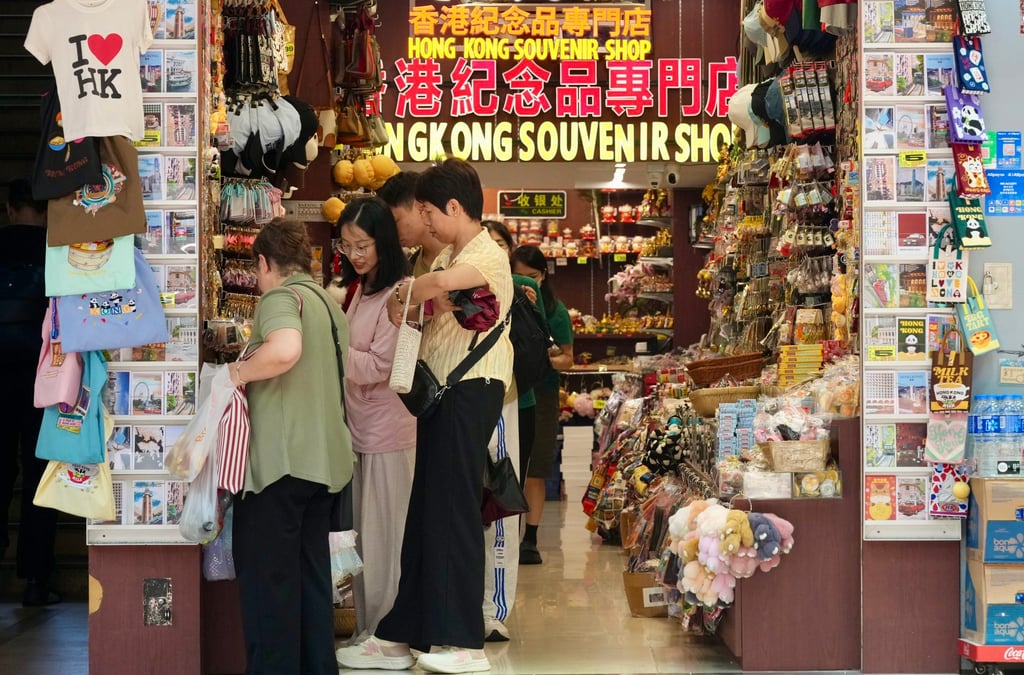
Tourists shop at Tsim Sha Tsui, Hong Kong, on August 7. Tourist arrivals are expected to reach 55 million this year, almost on par with the level in 2019. Photo: Jelly Tse
Advertisement
Select Voice
Select Speed
1.00x