Advertisement
.JPG?itok=ePLH1oLd&v=1750144283)

Opinion
Has great-power politics fanned the flames of war in Middle East?
Recent diplomatic efforts by Washington and Beijing have either excluded key actors or entrenched existing divisions
3-MIN READ3-MIN
14

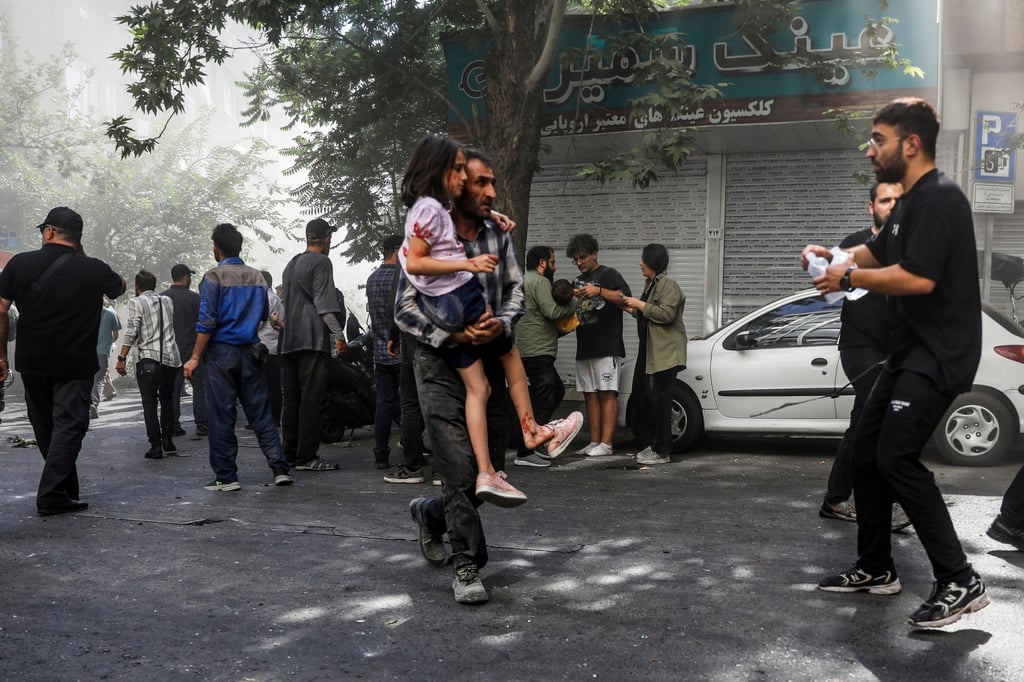
As Israeli bombs continue to pound Tehran and other sites throughout Iran, we are witnessing the logical conclusion of a long cycle of escalation and geopolitical intrigue in the Middle East. Despite multiple efforts by various actors to resolve the region’s deep contradictions through diplomacy, the fate of the Middle East appears, once again, to be decided by force.
The Abraham Accords in 2020 marked a watershed moment, as multiple Muslim-majority nations normalised ties with Israel, marginalising the Palestinian cause in the process.
Just as momentum appeared to build towards an eventual Saudi-Israeli normalisation deal, China staged its own diplomatic surprise, brokering a detente between Saudi Arabia and Iran. It was Beijing’s first significant foray into Middle Eastern peacemaking, boosting its confidence and ambition to become a global broker.
Advertisement
While the prospects for Saudi-Israeli normalisation faltered, China rolled out another bombshell in 2024. On July 23, leaders of major Palestinian factions, including Fatah and Hamas, signed the Beijing Declaration, aimed at ending division and strengthening Palestinian national unity. Chinese Foreign Minister Wang Yi called it “an important historical moment in the Palestinian liberation cause”, hailing President Xi Jinping’s contribution of Chinese wisdom for “addressing the Palestinian question”.
Perhaps the next logical step would be to broker an Israel-Palestine deal, but on China’s terms, cementing Beijing’s international influence by resolving one of the world’s most brutal conflicts.
But a series of dramatic events quickly overtook those aspirations. Israel assassinated Ismail Haniyeh, Hamas’ political chief and a key negotiator, during his visit to Iran. Meanwhile, the Beijing Declaration has yet to bridge the deep rift between Fatah and Hamas, who have resumed their mutual recriminations. And, of course, there has been no progress on a diplomatic settlement between Palestine and Israel.
Advertisement
Select Voice
Select Speed
1.00x