Advertisement

Opinion
Twin shocks of Israel-Iran war, Trump tariffs bring global recession closer
It doesn’t take much to tip a stalling economy into recession, and a new war in the Middle East plus US tariffs could do just that
3-MIN READ3-MIN
2

Stephen S.
The outbreak of a new war in the Middle East, together with a destructive tariff war, makes for a lethal combination in a sluggish world economy. Notwithstanding the tentative ceasefire, the odds of imminent global recession have increased sharply.
One shock was bad enough. US President Donald Trump’s tariffs imply downside risks to global growth. But the potential for a second shock – a war between Israel and Iran that has now ensnared the United States – compounds the problems for an increasingly vulnerable world economy. It fits with my theory of cyclical risk: it doesn’t take much to tip an economy nearing “stall speed” into outright recession.
This simple rule has worked remarkably well in predicting global recessions over the past 45 years. Unlike a recession in an individual economy, which generally reflects a contraction of real output, one at the global level typically involves about half the world’s economies contracting while the remainder continue to expand.
Advertisement
As a result, a worldwide recession is usually associated with global gross domestic product growth slowing to the still positive 2-2.5 per cent range – a shortfall of 0.8 to 1.3 percentage points from the post-1980 trend of 3.3 per cent. The exceptions were in 2009 and 2020, when the global financial crisis and the Covid-19 pandemic, respectively, caused outright contractions in global output.
The stall speed holds the key to cyclical risk assessment. It can be thought of as a zone of vulnerability, measured by significant downside deviations from trend growth. Looking back over the past 45 years, I would place the global economy’s stall speed in the 2.5-3 per cent range: when in this zone, the world lacks the resilience needed to withstand a shock. That is what happened in each of the past four global recessions.
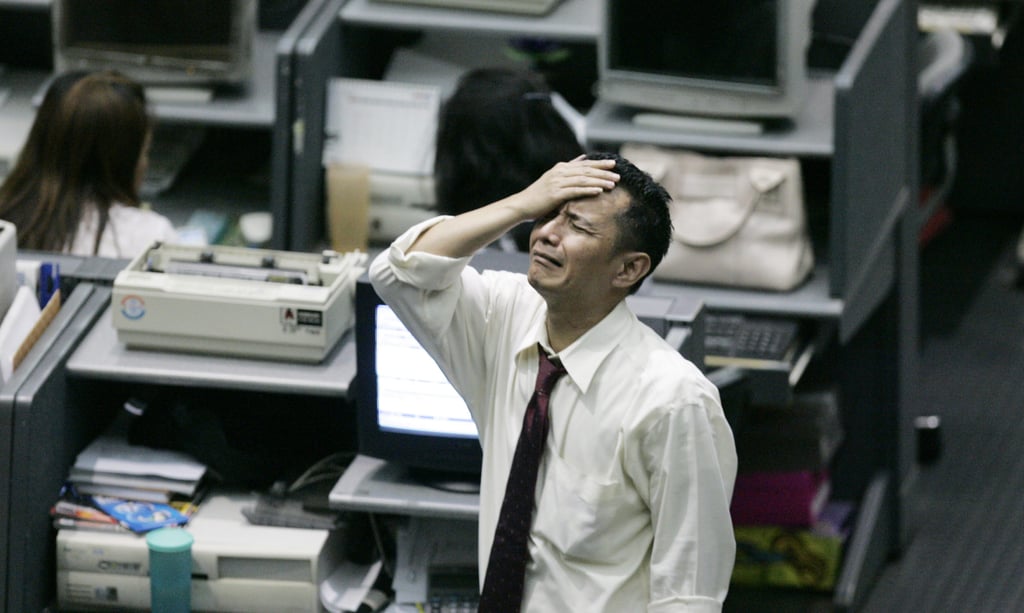
Fast-forward to today. According to the International Monetary Fund’s latest World Economic Outlook, global GDP growth is expected to slow to 2.8 per cent in 2025 – right in the middle of the stall-speed zone. Whereas recent global recessions were the result of single shocks, today the world economy could be hit by two: a tariff war and a kinetic war in the Middle East. The possibility of a double-shock combination only increases the odds of global recession; in forecasting circles, it’s as close to a smoking gun as you can get.
Advertisement
Advertisement
Select Voice
Select Speed
1.00x