New book examines evolution of justice during Hong Kong’s death penalty era
In Penalties of Empire, Christopher Munn explores the debates around key capital trials in colonial Hong Kong

In 1904, Hong Kong’s Supreme Court held a maiden sessions: no criminal cases were recorded for the whole month of November. Following an English tradition to mark the occasion, the chief justice, Sir Henry Berkeley, was presented with a pair of white gloves by the registrar “in token of the spotless innocence of the whole population”. Berkeley replied how remarkable the achievement was in a place like Hong Kong, with its vast, transient class of villains. He attributed the success to “dealing with criminals by deportation”, i.e. sending them across the border to China.
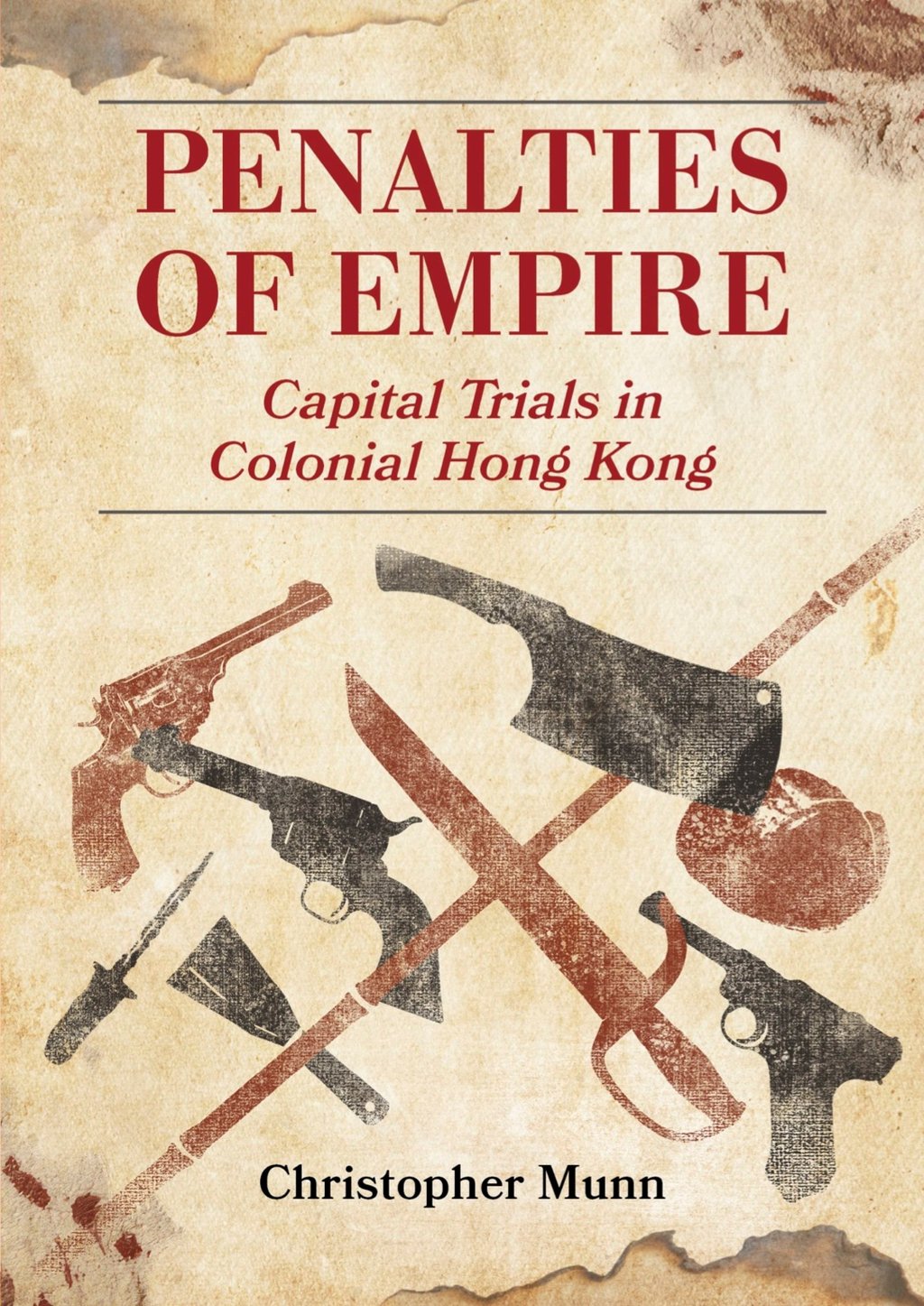
In fact, the phrase was first used by another chief justice, Sir Francis Piggott, in a 1908 murder case during which the defendants, who both spoke the Hoklo dialect, hadn’t understood the Cantonese-speaking witnesses or the English-speaking lawyers. After 14 minutes, the jury – hedging its bets – had found them guilty of manslaughter. Their counsel then objected to the lack of an interpreter; the prosecutor, in his turn, objected to the potential nuisance of, say, three prisoners speaking three dialects, each requiring translations. Piggott stated that providing interpreters, inconvenient though it would be, was “one of the penalties of Empire”. The Hoklo men were acquitted.
“It’s one example – of many – how the colonists regarded themselves as victims rather than perpetrators,” says Munn. “But I would say that the Hong Kong experience in criminal justice was not as extreme as some other places, particularly India. There was a reasonable concentration of fairly able lawyers who were, mostly, on the commercial side but did criminal work as well. And because there was legal aid in capital cases from a fairly early date, Hong Kong was not the worst.”
Penalties of Empire tracks the colony’s forensic experience across nine capital trials dating from 1857 to 1934. These, he explains, were chosen partly because of good source material and partly to illustrate judicial turning points, such as the legal-aid provision or the creation of the Court of Final Appeal. They are not typical of Hong Kong’s capital trials, which mostly consisted of murders committed during robberies or quarrels; nor are they written in the breathless style of true-crime, cold-case-exhumed podcasts. “I didn’t want to retry any of these cases,” he says. “I wanted it to be an exploration of how the justice system works in reality, not how it was said to work, so I focus more on what’s going on in the courtroom and among the various people involved. I wanted it to be a more sober, rather than sensational, account and as matter-of-fact as possible.”