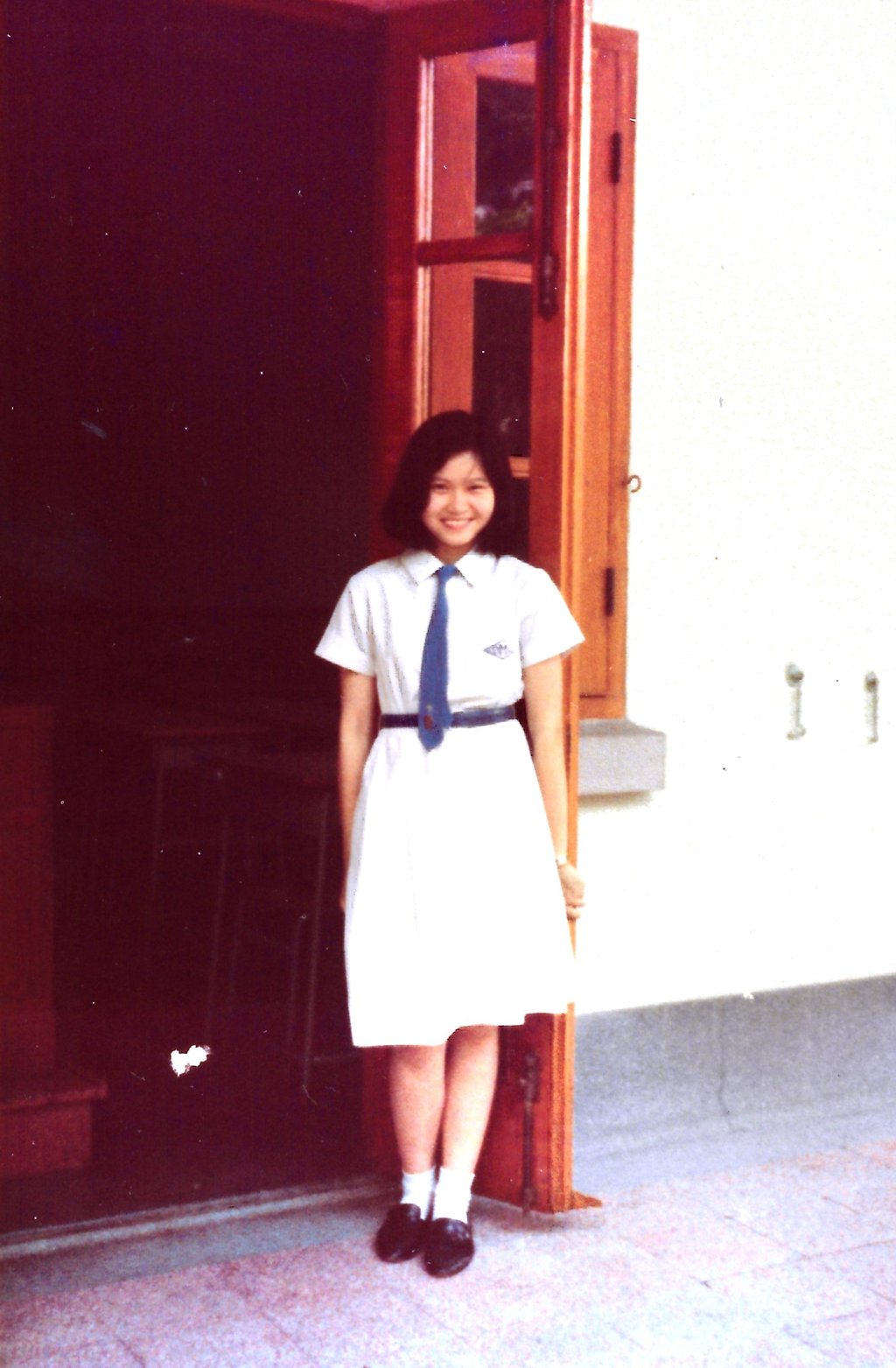
I GREW UP IN HONG KONG. My father was an interior designer, my mother a housemaker. I went to St Mary’s Canossian College for most of my secondary schooling, until transferring to King’s College for the last two years. Although it’s an all-boys school, for a brief period they accepted girls and I had the privilege to study there during that time. I was a bit of a nerd, a straight A student, good in math and science. I didn’t do much except focus on my exams, but I was never too sure what my career would be. I applied to a bunch of universities and went to the University of California, Berkeley (in the United States), when they accepted me for computer science.
Jessica Kam-Engle as a student at St Mary’s Canossian College in Hong Kong. Photo: courtesy Jessica Kam-Engle
AFTER I GRADUATED, in 1990, I got a job at software giant Oracle right away. They were pretty big already, with lots of resources. They even flew me in for an interview. I was well paid, and they treated us well. The company was about 70 to 80 per cent guys. I always seem to be in settings where there are more males than females, but I never came across any discrimination or disrespect. I actually quite enjoy being the minority as a woman and Asian. Male engineers tend to be quite straightforward; they speak their minds without a lot of politics. Silicon Valley was growing so much. It was still a boom period. I had a very comfortable life but something was missing.
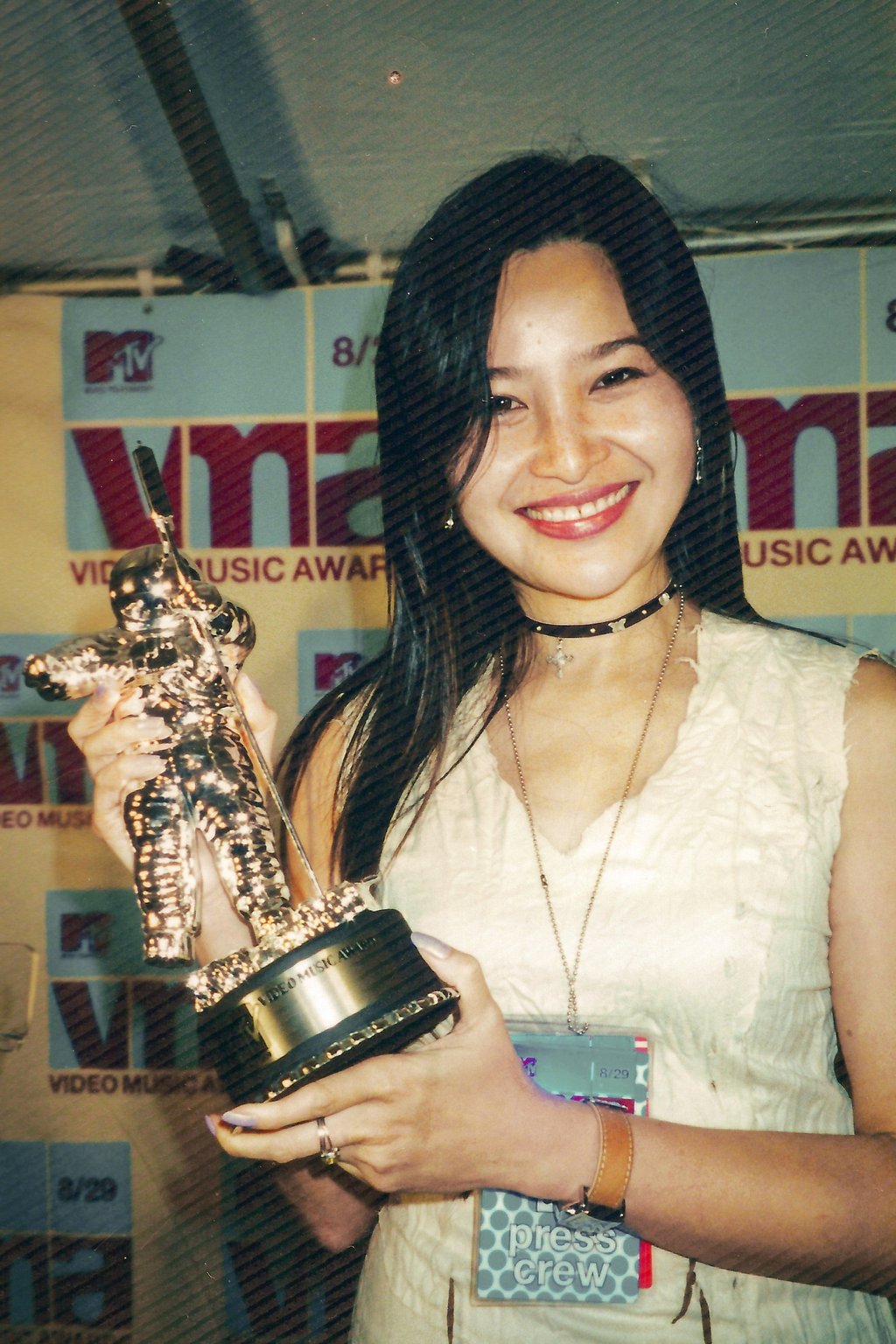
I LOVED MOVIES and storytelling, so I decided to study film at the American Film Institute. It was a short course but I realised it was something I enjoyed. So I decided to jump ship and pursue a new life. I had no idea what I would do in film. I didn’t know if I was creative enough; I’ve always been logical, but I realised that technology influences people’s way of living, whereas film influences people’s minds. That’s the power I was attracted to. I was obsessed after that.
Jessica Kam-Engle attending the MTV Video Music Awards. Photo: courtesy Jessica Kam-Engle
I THEN DID a student-exchange programme in the Netherlands and an internship for a cable company. That led to some contacts and a job at the MGM network, which would soon bring me back to Hong Kong. They opened a channel in Asia called MGM Gold to show old Hollywood movies and I became their first employee. It was a dream job but they overestimated the appeal of classic films. Asian audiences want new things. The channel closed down after about a year and after that I went to Dow Jones and then MTV (in Beijing), where I was promoted to run MTV China. It was exciting and challenging. I did programming as well as ad sales. There were a lot of parties, and I was exposed to interesting artists and other people, including my big boss, (American media magnate) Sumner Redstone. In addition to a real passion to win, he also had the ability to dream big and see things at a higher level, with a wider perspective. What he’s most famous for is coming up with the line “content is king”. That motto has defined my career, too.
Advertisement
I CAME BACK TO Hong Kong again in 2005, mainly because I got married, and I joined Celestial Pictures, which distributed the Shaw Brothers’ movie catalogue. I went from cool, hip, young and trendy MTV to selling classic Hong Kong movies from 40, 50 years ago.
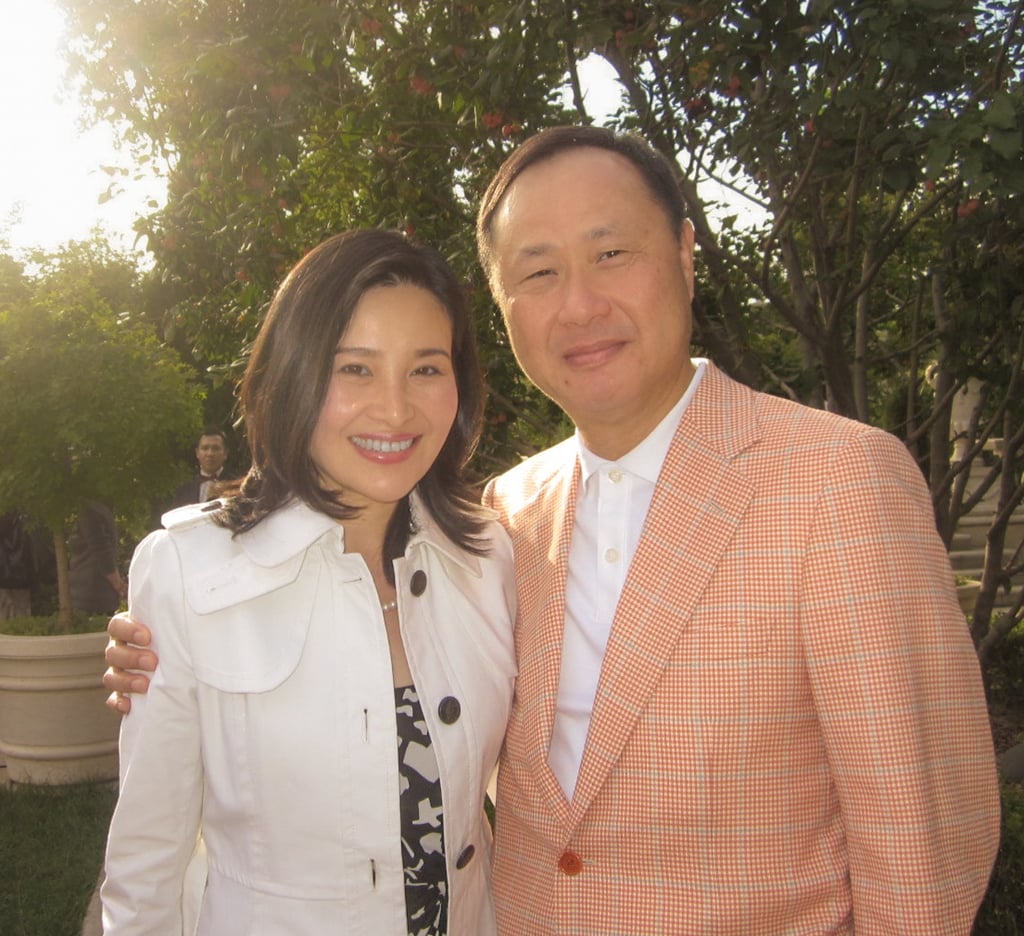
Jessica Kam-Engle with director Jeffrey Lau, with whom she produced films such as Just Another Pandora’s Box and Lock Me Up, Tie Me Down. Photo: courtesy Jessica Kam-Engle
THEN IN 2008, my journalist husband got a job in Beijing. It was an exciting time because we’d just had a baby. China was opening up, the Olympics was happening, and I thought I could take a break, be a mother and not work. But by chance, a guy who invested in a film company approached me. He got into the business but had no experience. I didn’t know him but I met him, explained as much as I could about how Hollywood studios made money, and after, he said, “Why don’t you join us?” I didn’t plan on working but I ended up with a job. The company was Galloping Horse, one of the most aggressively expanding media companies in China. I ended up working with big directors including John Woo and Jeffrey Lau.