Advertisement
PostMag
Life.Culture.Discovery.
Hong Kong
PostMagCulture

She was at the height of her corporate career. Then she moved to a village of 30

For residents of Nam Chung, in the northeastern New Territories, the privations of rural living are worth the rewards of escaping the rat race

Reading Time:7 minutes
Why you can trust SCMP
1
An aerial shot of Nam Chung, in the northeastern New Territories of Hong Kong. Photo: Alexander Mak
Joyce Yip
This summer’s barrage of severe rainstorms and typhoons wreaked havoc at Kit-ching’s farm. She had planned for a break in August, the honeymoon period between sowing and harvest, but toppled trees, collapsed fences and upheaved topsoil would cost her weeks, if not more, of repairs.

“I can’t keep up with climate change,” she says. “Thankfully, most of the crops I planted 10 years ago have developed strong, deep roots to brave these tropical storms. The new seedlings don’t stand a chance.”
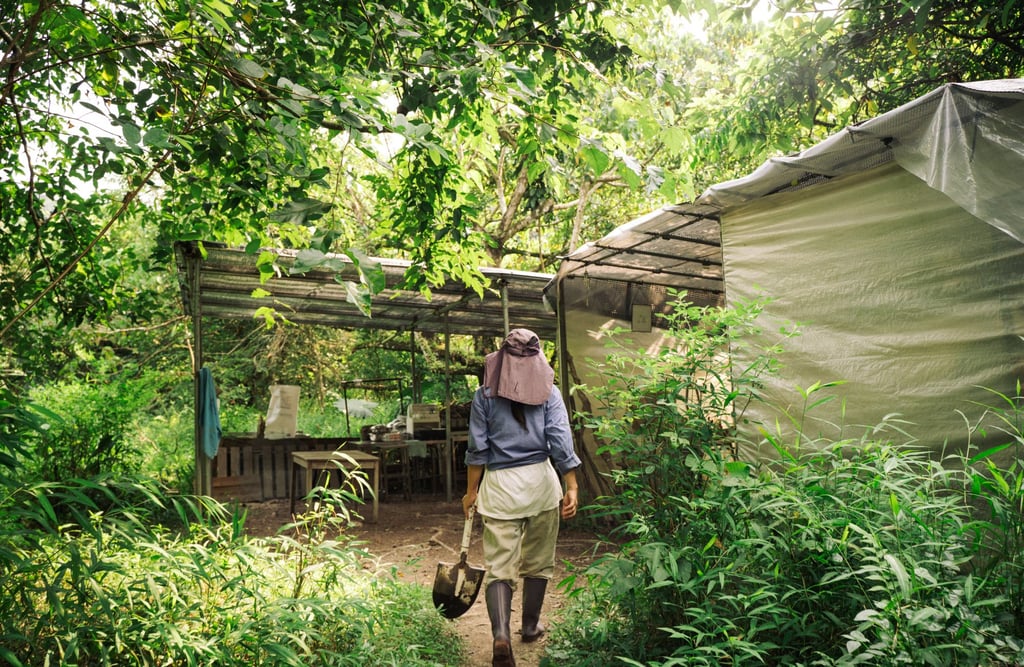
Kit-ching’s farm in Nam Chung, Hong Kong, is filled with grapes, perfume lemons and limequats. Photo: Alexander Mak

A full-time farmer since 2015, fifty-something Kit-ching, who declined to provide her family name, practises low-intervention agriculture across more than 5,300 square metres of land spread around Nam Chung, a rural village 30 minutes from Fanling. Before that, she lived in To Kwa Wan and worked in agricultural management, eventually segueing into more hands-on farm work that landed her in the northeastern New Territories village.
Advertisement
She calls her time in Nam Chung an experiment, not just in proving that she can survive as a farmer in Hong Kong, where only 2 per cent of agricultural goods are grown locally, but also in realising new ways to live in a city that’s consistently ranked as one of the most expensive in the world.
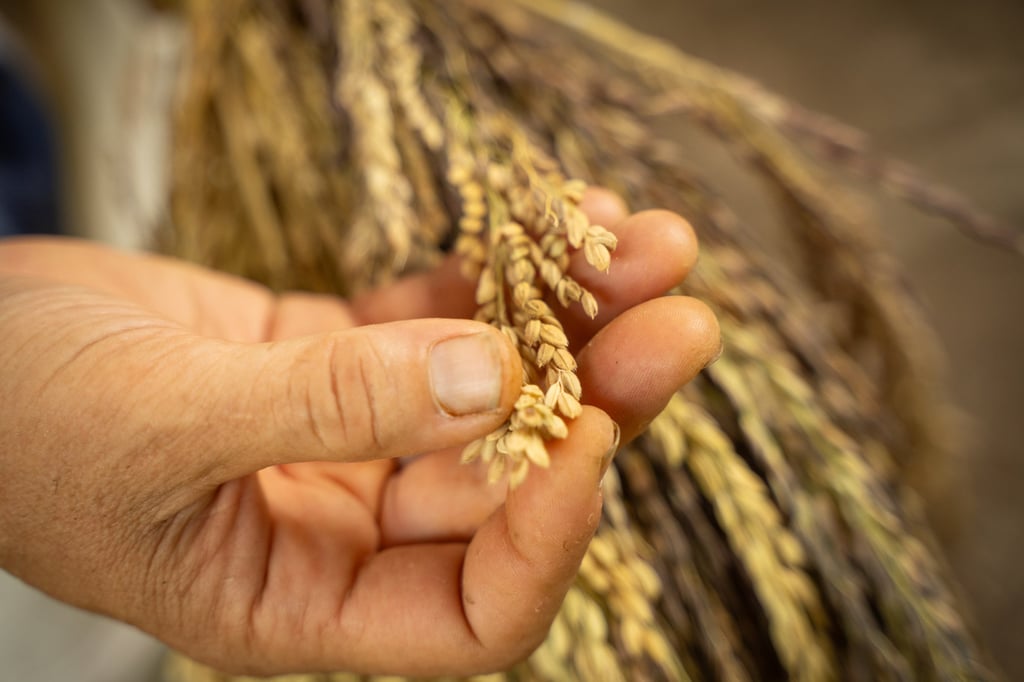
Local farmer Kit-ching presenting the rice she grew. Photo: Alexander Mak
“Of course, I need to pay rent for my home and land here, but money is not something you need every day in Nam Chung,” she says. “The air, space, organic produce from my farm, things city-goers pay big bucks for, are all free. Such luxuries, however, come at a cost. There’s no air conditioning in my home. On hot summer days, I’d ride the minibus back from Fanling and dread getting off and stepping into the heat, but then I remember I can cool off by the water.”
Advertisement

Currently, her harvest – grapes, perfume lemons and limequats, a hybrid between the kumquat and key lime – goes to bakeries, kombucha makers, greengrocers and whoever engages with her posts on Instagram. She also hosts educational tours and workshops for a fee. Five years ago, her farm finally broke even.

Advertisement
Select Voice
Choose your listening speed
Get through articles 2x faster
1.25x
250 WPM
Slow
Average
Fast
1.25x