Poison books: Hong Kong joins the search for Victorian-era arsenic-laced tomes
Victorian-era books may contain arsenic in their bindings. One Hong Kong University book conservator went on the hunt for such toxic volumes

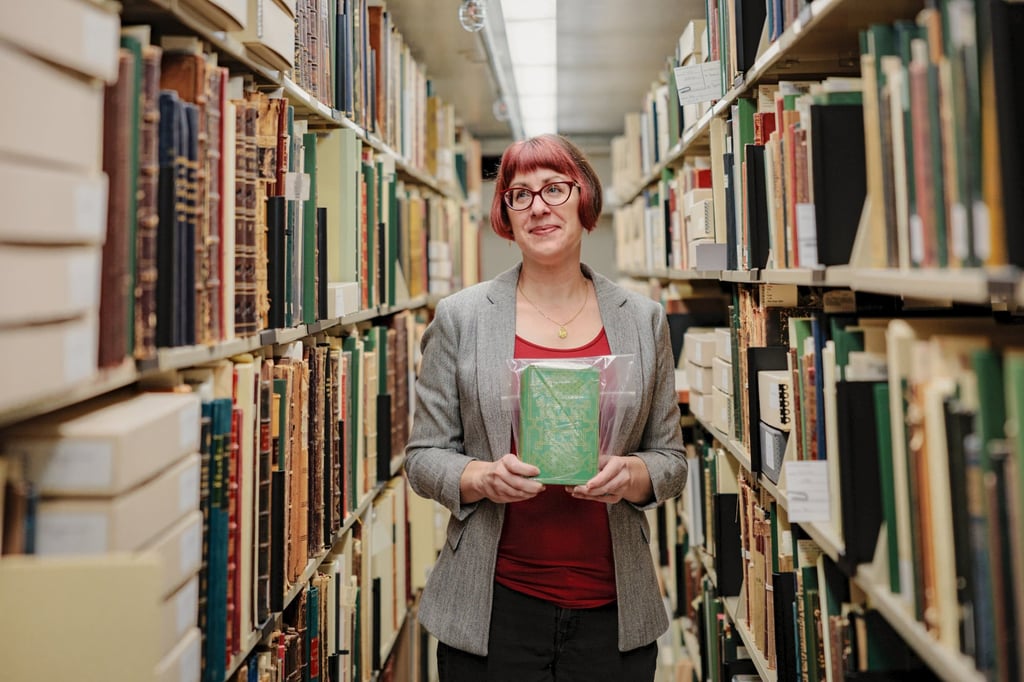
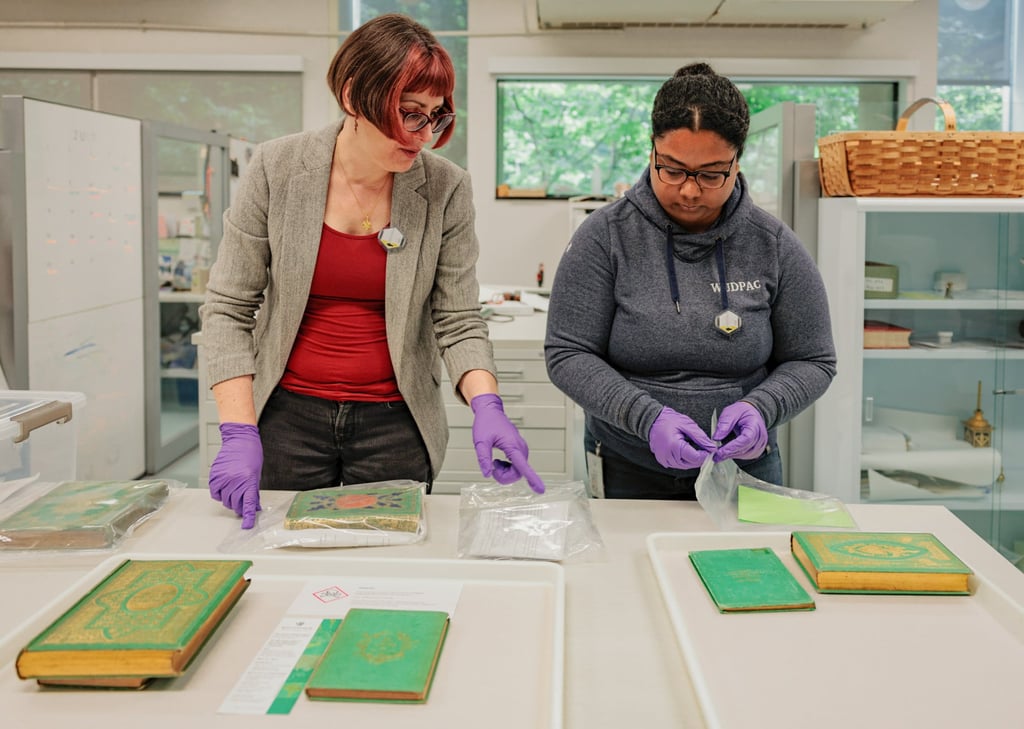
In early September 2025, Lesley Liu, head of preservation and conservation at the University of Hong Kong Libraries, carefully surveyed the institution’s collection of rare Western books from the Victorian era (1837–1900). Recent research had made her acutely aware that within these cloth bindings, a century-old danger could be hidden within fingertip’s reach. She was on the lookout for titles that matched a growing online database of “poison books”: book bindings known to contain substances such as arsenic in combination with other heavy metals.
In 2017, Liu had taken a month-long course on historical book structures for conservators at the Winterthur Museum, Garden and Library in Delaware, in the United States, where she’d met Melissa Tedone, assistant professor of library and archives conservation at the University of Delaware. Over the years, they kept in touch.
In 2019, Tedone received a book she was tasked with restoring for an exhibit. Published in 1857, Rustic Adornments for Homes and Taste was wrapped in a brilliant emerald-green cover. Tedone noticed that the dye used to strengthen the book’s cloth cover was flaking away. “I was reading about Victorian-era wallpapers,” Tedone says, “and how arsenic was often bound with copper to create vibrant, eye-catching colours, particularly greens.”
The tragic history of Victorian wallpaper is well-documented, the culprit being a Swedish chemist, Carl Wilhelm Scheele, who invented the arsenic green pigment in 1775. The brightness of “Scheele’s green”, as it came to be known, made it an instant success, so much so that it became the predominant shade of the 19th century, edging out older pigments and dyes. It didn’t take long for the trend to turn deadly. While most Victorians believed that wallpaper infused with arsenic couldn’t cause harm (unless you licked it), it wasn’t until the late 1860s that doctors discovered the truth. By that time, arsenic had also found its way into cosmetics, toys, textiles and paints.
“A great deal of slow poisoning is going on in Great Britain,” wrote Birmingham doctor William Hinds in 1857, on finding that he grew sick every time he retired to his study, which had green wallpaper. Testing later revealed that his wallpaper was laden with arsenic. Arsenic isn’t the most stable of substances – poisonous, flaking wallpaper was inhaled in homes regularly, and moisture, abrasion or heat could cause the release of toxic plumes of dust.
Before the public could be warned of its dangers, arsenic-infused products – Scheele’s green in particular – had become commonplace. Chemists and paint makers had blended arsenic with other colours, such as canary yellow, to create vibrant new hues. An increasing number of reports about mysterious illnesses and deaths of children, even entire families, gained the attention of the general public in the mid-19th century, though there are no lasting records of casualty numbers. Back in 2019, when that bright green book landed on Tedone’s desk, “the vivid green cover caught my eye”, she says. “I wondered, ‘Could the book be infused with arsenic too?’ I decided to test it, just on a whim.”
The results justified her fears: the book contained an outrageous amount of arsenic. “I genuinely didn’t expect the results to be positive,” says Tedone. “I knew that if this book had arsenic, there could be many others lurking in libraries and private collections around the world.”