Jiangnan’s rural retreats offer an escape from the city hustle
Rural tourism is all the rage on the mainland but it’s still possible to find idyllic villages ‘south of the Yangtze River’ that remain unspoilt by the visiting hordes

There was once a province called Jiangnan. Although no longer marked on maps, it exists in everyday parlance as a cultural region – somewhere rich, fertile and evocative of the fabled Song dynasty (AD960-1279).
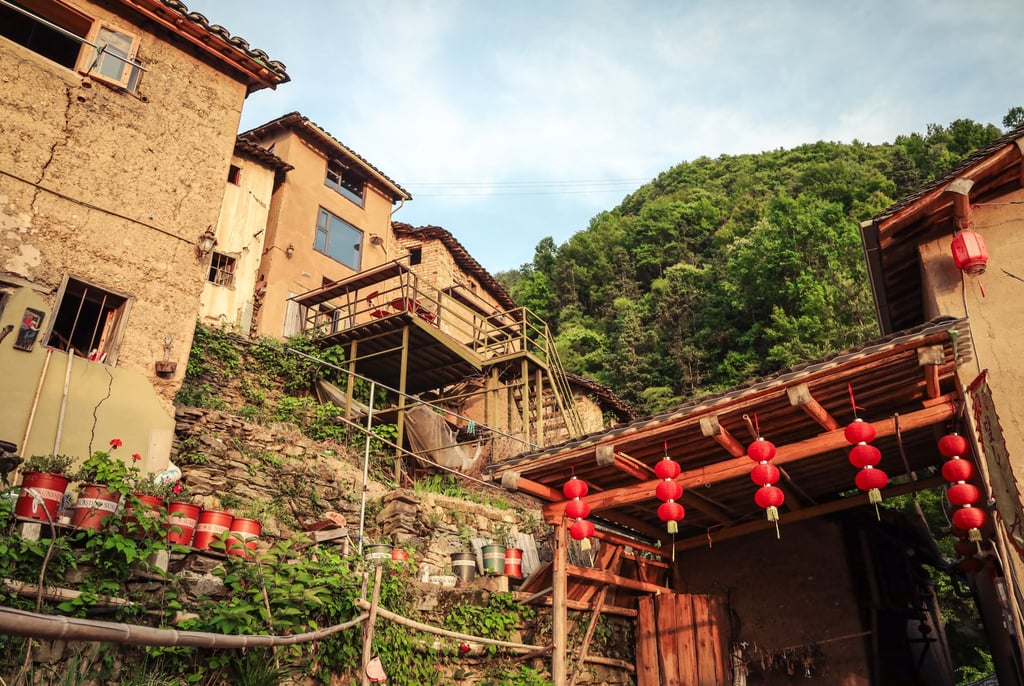
Sometimes referred to as the Yangtze River Basin, Jiangnan is associated by many with Shanghai and the industrial cities of the lower valley of that waterway. Yet, while Jiangnan does boast an unequal share of China’s top-tier cities, swathes of the region – from the lower half of Jiangsu and southeastern Anhui through inland Zhejiang – remain rural. Furthermore, roughly 70 per cent of Jiangnan is hill country, bearing craggy topography that has sequestered villages from the prosperity concentrated along the port-studded coast.
This situation is changing only now, as roads and railways connect remote villages, transforming them into seductive bolt-holes for burned-out urbanites, a trend that is being repeated across the country.
Last year, rural tourism revenue in China exceeded 950 billion yuan (US$139 billion), according to government data, reflecting a 5.8 per cent increase on the previous year, as mainland travellers sought an escape from the “996” work culture of the major east coast cities. That money is flowing into an increasing number of villages recognised by UN Tourism as Best Tourism Villages, such as Digang (Zhejiang province), Dongluo (Jiangsu) and Jikayi (Sichuan), as well as more established attractions such as Wuyuan (Jiangxi), Hongcun (Anhui) and Baisha (Yunnan). But with many of those destinations having become victims of their own success, in-the-know travellers are turning their backs on commercialised old towns and embracing the great vistas, cultural integration and escape from the crowds found in even more remote settings.
It is that promise of rural quietude and pastoral scenery that had me plotting a passage south.
Fast trains from Beijing take between six and seven hours to get to Huangshan but I instead hop on the K1109, which departs Beijing Fengtai Station just after lunch and will arrive at Huangshan Station 20 hours later, in time for breakfast.
An expanse of wheat is all that fills the windows as the locomotive rolls southwards across the Central Plains. It isn’t until after sunrise that I find that the uniform north has been supplanted by verdant mountains overnight, evidence that we’ve crossed the Yangtze and are now, quite literally, in Jiangnan, which means “south of the river”.
At Huangshan, a rendezvous with a friend, Xu Du, in the station forecourt leads to a drive northeast through the zhuhai (“bamboo seas”) of She county.