Meet Hong Kong’s unsung hero volunteers as they reflect on their overseas missions and the aftermath of the Tai Po fire
Discover how Hong Kong doctors Tsang and Lo, and nurse Tse apply hard-won humanitarian skills to support Tai Po fire survivors with medical care, empathy and psychological first aid

On the second night of the fire at Wang Fuk Court in Hong Kong’s Tai Po district, which killed 168 people, Dr Luke Tsang stepped out of the train at Tai Po Market station. Before he could even smell the smoke from the flames, he was struck by how the station had transformed into a supply-holding point, with human chains passing water, blankets and clothing hand to hand.

The sight transported him back to a rain-soaked airstrip in Haiti, where he’d witnessed a similarly chaotic scene of donated materials. The disaster had followed him home.
Tsang, now retired, spent three decades working as a family doctor in Lam Tin, overseeing medical responses to Sars, swine flu and Covid-19, and volunteering on missions to post-earthquake Sichuan and Haiti.
It was in Haiti, in a convent-turned-clinic, that he saw X-ray images so harrowing that he had only before seen their like “in textbooks during medical school”. A girl, under 10 years old, had walked in with a deformed upper limb. She had fallen weeks earlier, but the earthquake meant she went six to eight weeks without treatment. The bones had already set wrong.
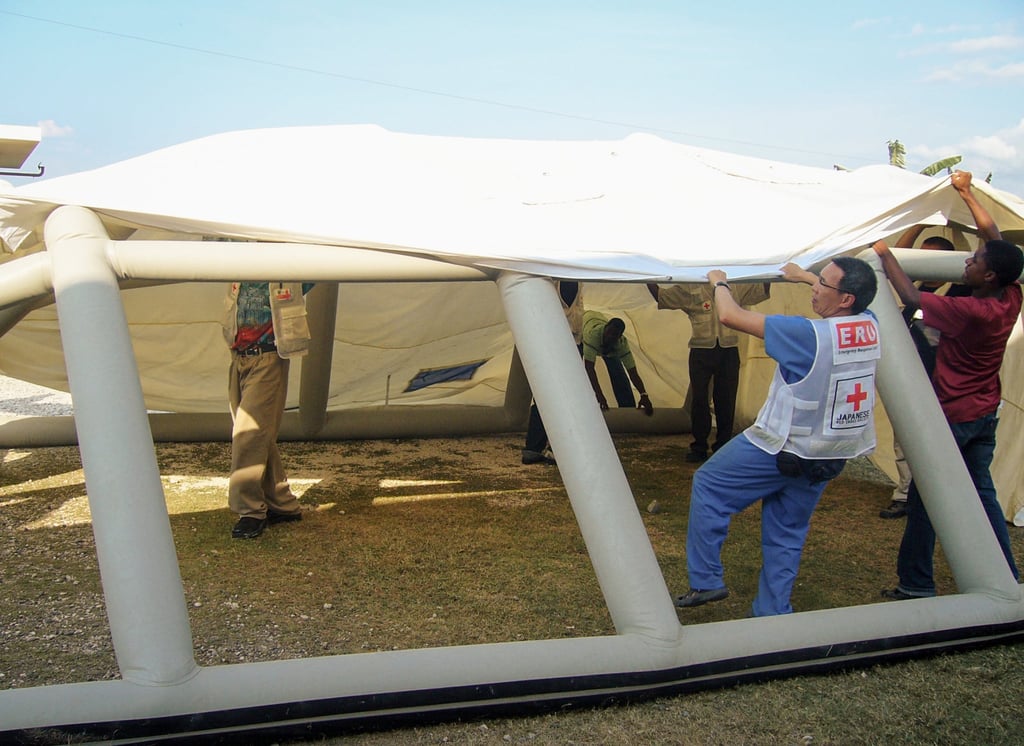
“I looked at the X-ray and thought ‘it’s hopeless’ because the bones had already set. She was very thin and panting, unable to catch her breath even when lying down. So we did an X-ray of her lungs,” recalls Tsang. “She had a very serious case of tuberculosis. I’ve only seen that type of X-ray image in textbooks, never in Hong Kong. The trachea had already been pulled to one side, calcified,” he says. It made him realise how fortunate those in Hong Kong were.
Fifteen years later, Tsang felt that familiar sense of dread as another disaster unfolded, only this time, it was in his home city. Seeing the buildings in Tai Po turn into “smoking chimneys” was “traumatic”. He had responded immediately when the Red Cross called for his deployment to its mobile clinics.
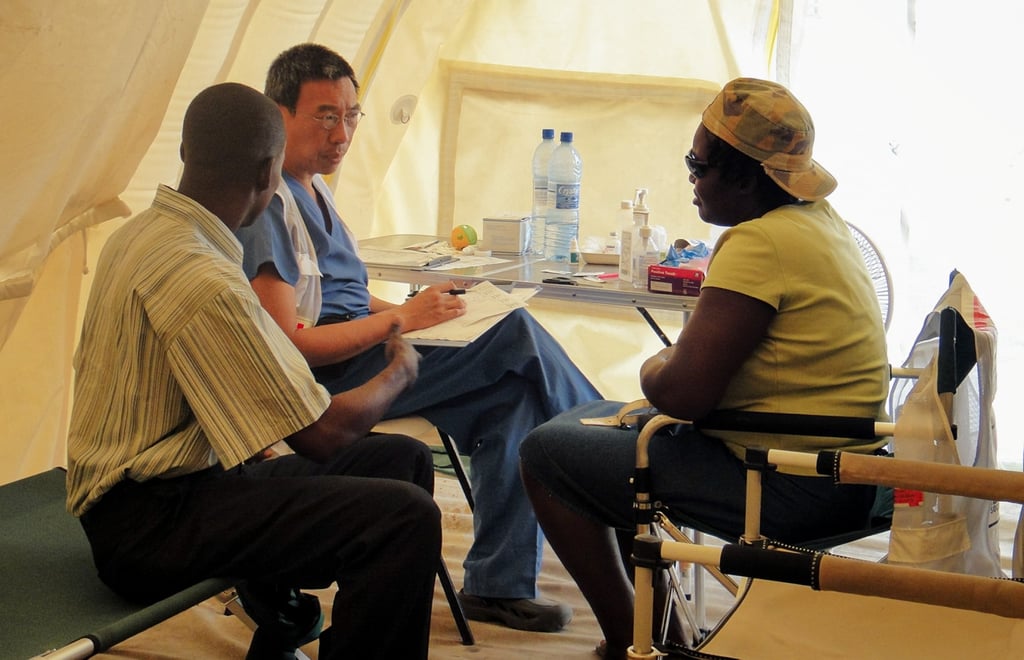
“Like many long-time residents, I had not experienced a major disaster in a place I call home, and to which I have deep emotional attachments,” says Tsang. “The initial response was one of hurt and pain.”