Solar fish pond devices boost growth with less labour in San Tin, Hong Kong
A University of Hong Kong team has designed innovative structures that modernise traditional aquaculture while creating public spaces

What if there were a way for these fish ponds to coexist with new developments, serving vital ecological, economic and recreational functions for the future residents of the Northern Metropolis?
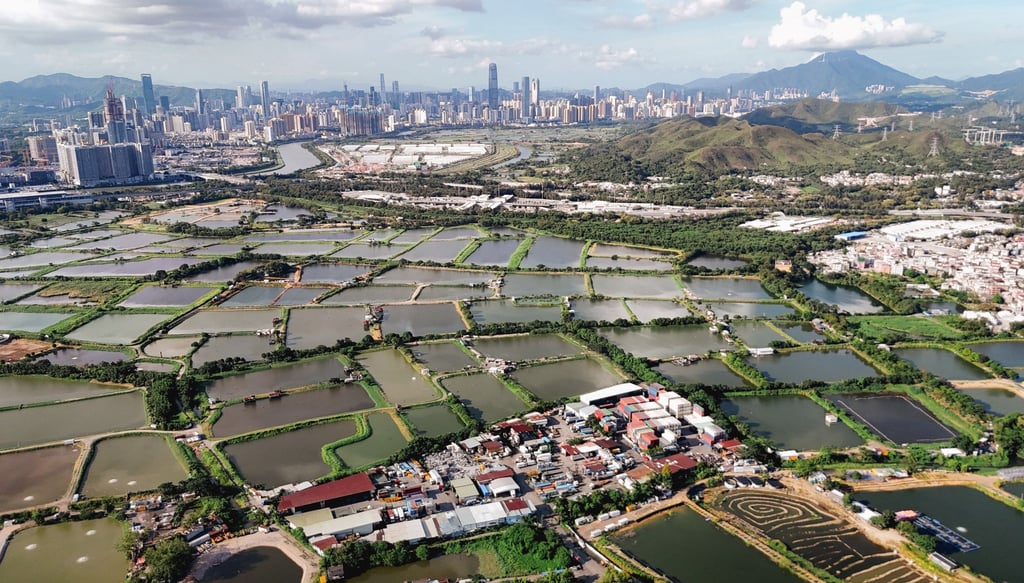
This is a question that a University of Hong Kong team has set out to explore. “We’re looking to find a strategy that can balance maintaining a viable fish pond operation but also create a place that’s enjoyable for the public to engage with the landscape,” says Joshua Bolchover, professor of architecture at HKU.
We didn’t want it to blend in. We wanted it to have a presence
Working alongside architects Jersey Poon and Donn Holohan, and landscape designer Lu Xiaoxuan, Bolchover has collaborated with villagers to chart a new course for the 600 hectares of fish ponds around San Tin, near the Shenzhen border and in the former Frontier Closed Area, established by the colonial British government to restrict movement across the border. They have installed three innovative structures that replace oil generators with solar power, enabling feeding, irrigation and aeration of the ponds, in addition to collecting their harvest. “It sounds really simple,” says Bolchover, “but this was a long, drawn-out, arduous project.”