Can architecture be fleeting? Check out these transient structures and see
A Zhejiang pavilion takes top honours at the RIBA Asia Pacific Awards, alongside a Hong Kong finalist celebrating the beauty of impermanence

“Our inspiration came from nature’s simplest gestures – branches extending from a forest’s edge, swaying gently in the sea breeze. The pavilion translates that quiet movement of life into architectural form,” says Shen Lijiang, lead designer and managing partner of GN Architects, the Shanghai-based practice that designed the wind-driven kinetic art installation and community social space as part of the “Hello, Little Island” government revitalisation initiative. Chaishan, once a thriving village, is now home to just 96 elderly residents.
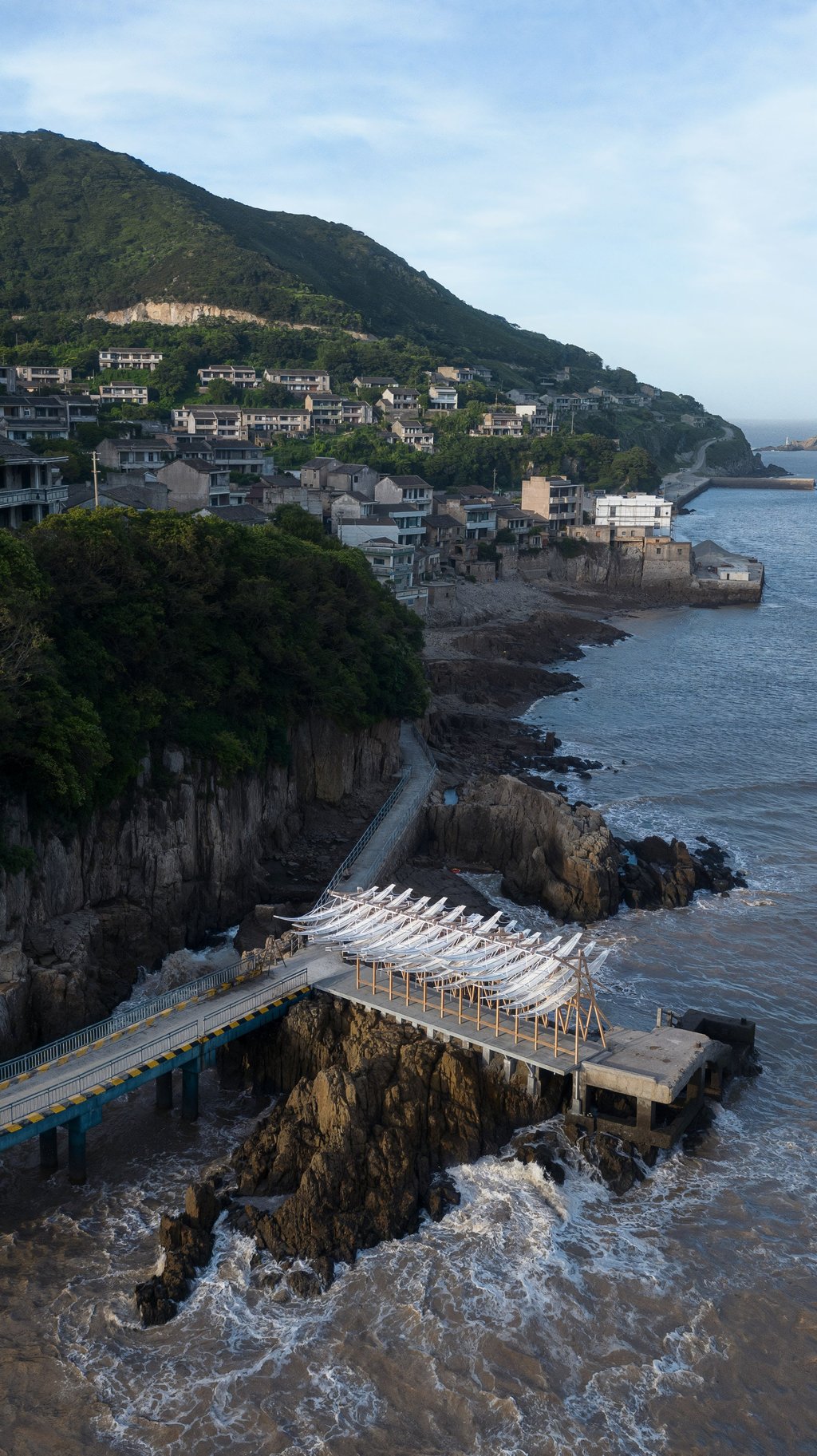
The pavilion’s delicate dance with nature, on an unpredictable stage, culminated in a victory, on December 17, at the inaugural RIBA Asia Pacific Awards, where the Royal Institute of British Architects recognised architectural creativity, innovation and excellence in the region. The ceremony, held in Shenzhen, saw 63 finalists, from 13 countries and regions, compete for 10 awards in not only the temporary architecture category but also those that reflect other evolving priorities in the field, notably artificial intelligence-powered design and future projects (unbuilt or conceptual projects that also resolve major societal problems). Hong Kong’s sole finalist, the E.CO Rotunda, was another project underscoring the beauty of impermanence.
Melvin Tan, founding partner of Laud Architects in Singapore and jury chair for the Temporary Architecture category, describes these creations as “buildings that have a specific function relating to an event or limited period of time”. The category encompasses installations and short-term structures such as the Seaside Pavilion, which has a lifespan of three to five years.
“There are different requirements and expectations between a temporary building and a permanent one, so a stand-alone category allows the various projects to compete and shine on the same basis and foundation,” he adds. “Temporary architecture is usually not beholden to the array of codes and regulations that permanent structures require and allows architects greater flexibility in their design response to the brief.”
Yet, this very flexibility demanded a resilience that no building code could dictate. The project’s true test arrived when a typhoon struck mid-construction, sweeping materials into the sea. In a moment that defined the pavilion’s purpose, local villagers rescued the drifting components. “That shared effort – between designers and residents – gave the project an even deeper meaning,” says Liu Tong, who was part of the architecture team.