Wild Yeast, the Michelin-starred restaurant redefining Taizhou cuisine
When we hear ‘regional cuisine’ we think ‘authenticity’ – but tradition is only a starting point for Lin Zihan of Hangzhou’s Wild Yeast

A recipient of the Young Chef Award in the 2024 Michelin Guide Hangzhou, Lin, born and raised in Taizhou, took an unconventional path to cooking. While he studied design in university, he opted for a career in the culinary arts after graduation, “because I thought I wouldn’t need to talk much in a kitchen”, he says with a chuckle.
His journey took him through multiple French restaurants, including Michelin-recognised The Pine in Shanghai, before returning to his hometown to open his first bistro. When he was forced to close it after a year due to Covid-19, Lin decided to relocate to Hangzhou to open his next concept.
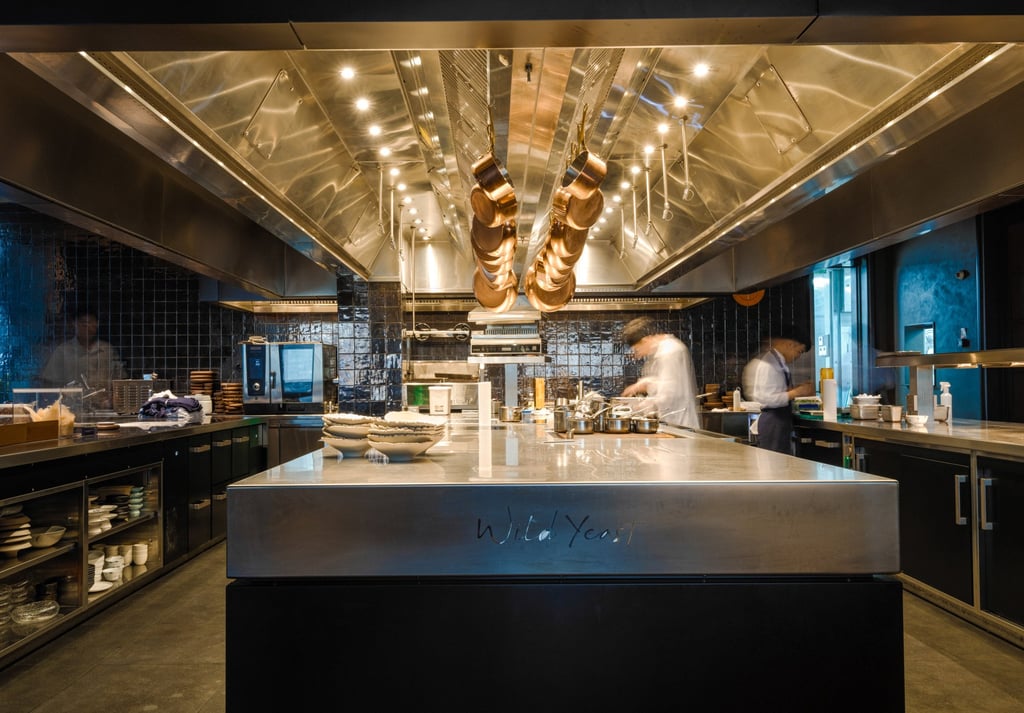
“We started with Japanese-French fusion at Wild Yeast,” Lin recalls, “but then we realised that we could keep importing French produce and techniques, only to end up with ‘copy and paste’ dishes. But with local Taizhou ingredients? They don’t just taste better because they’re fresh, but because we are better at unlocking their full possibilities as we grew up with them. That familiarity lets us innovate in ways outsiders can’t, just as we’d struggle to fully unlock the potential of French produce.”
While Lin has created the portmanteau of Tai-French cuisine to capture his style, he says, “in reality, we borrow techniques and flavours from other regions of China to let our seasonal ingredients shine.
We are better at unlocking their full possibilities as we grew up with them
“We believe that the best representation of Taizhou cuisine isn’t necessarily the most traditional method, but rather a way that honours the ingredient and lets the natural flavours sing. At the end of the day for us, it’s less about whether it’s French or Chinese technique, but more about whether it tastes good. Our team finds the best way to make our natural bounty taste good, and we keep learning new techniques and flavours from all cuisines every day to do so.”
So what exactly is Taizhou cuisine? Lin summarises his native cuisine as “small seafood, carb-heavy delicacies”. Think petite yellow croakers and wheat flatbreads.