If there’s one piece of advice Andre Agassi offers, it’s to dream while awake. “It’s way too easy to dream when you’re sleeping,” says the American tennis legend. “Don’t be scared to dream big because it takes as much effort to dream big as it does small.” He advises choosing your definition of success carefully. Even if you achieve it, it might not feel the way you expected.
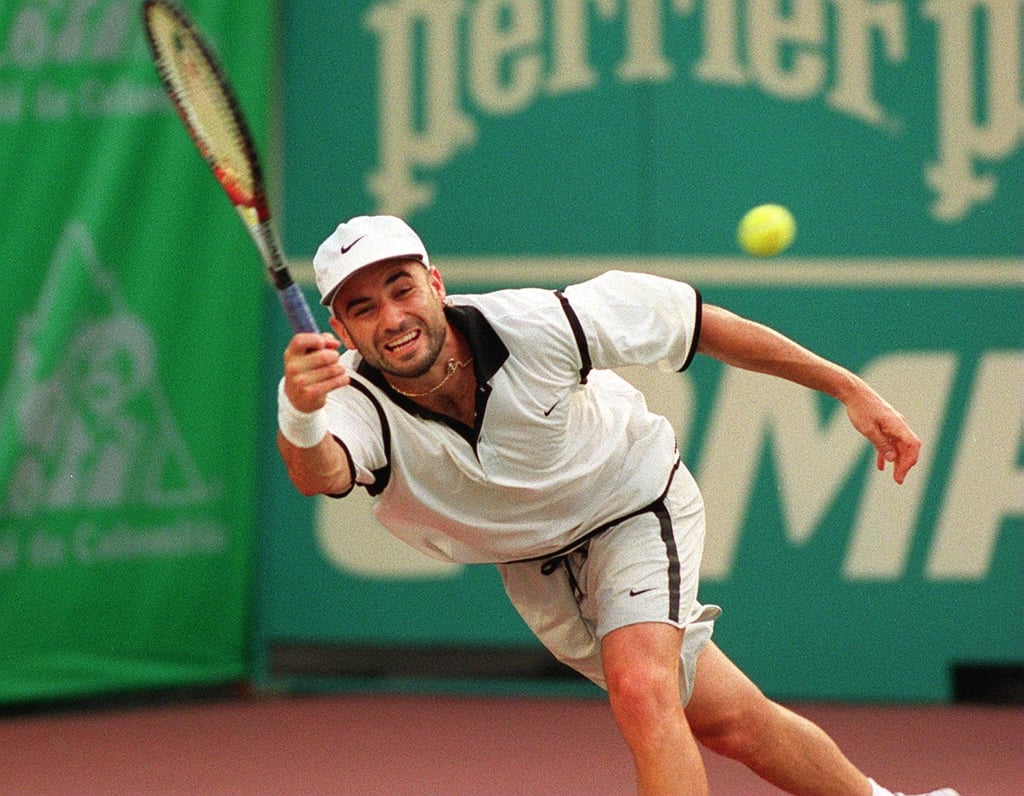
Fresh off his run as Laver Cup captain, Agassi was in Hong Kong in October for the Prudential NextGen Aces event, a panel series and exhibition match. It was a return to a city that changed the course of his career. He has fond memories of 1999, when he won the Salem Open against Boris Becker. “Hong Kong was definitely a good-luck charm for me in 1999,” he says. “It started me off on a path of winning, and [it] didn’t seem like I stopped for a while.”
Andre Agassi in action at Hong Kong’s Victoria Park during the Salem Open in 1999, in a match against Nicolas Kiefer. Photo: SCMP Archives
That year marked a defining comeback: from dropping from his No 1 position in 1995 to No 141 in 1997, Agassi clawed his way back to the top. The Hong Kong tournament was the first in a string of victories, including the French Open and US Open.
Falling from the top was a turning point. “It was the moment that required the most resilience in my life, off the court,” he says. The climb back demanded daily discipline and a level of focus he’d never experienced before.
He reflected extensively about navigating these career peaks and lows in Open, his widely praised 2009 autobiography. In it, he famously admitted to hating tennis – not the sport itself but his relationship to it.
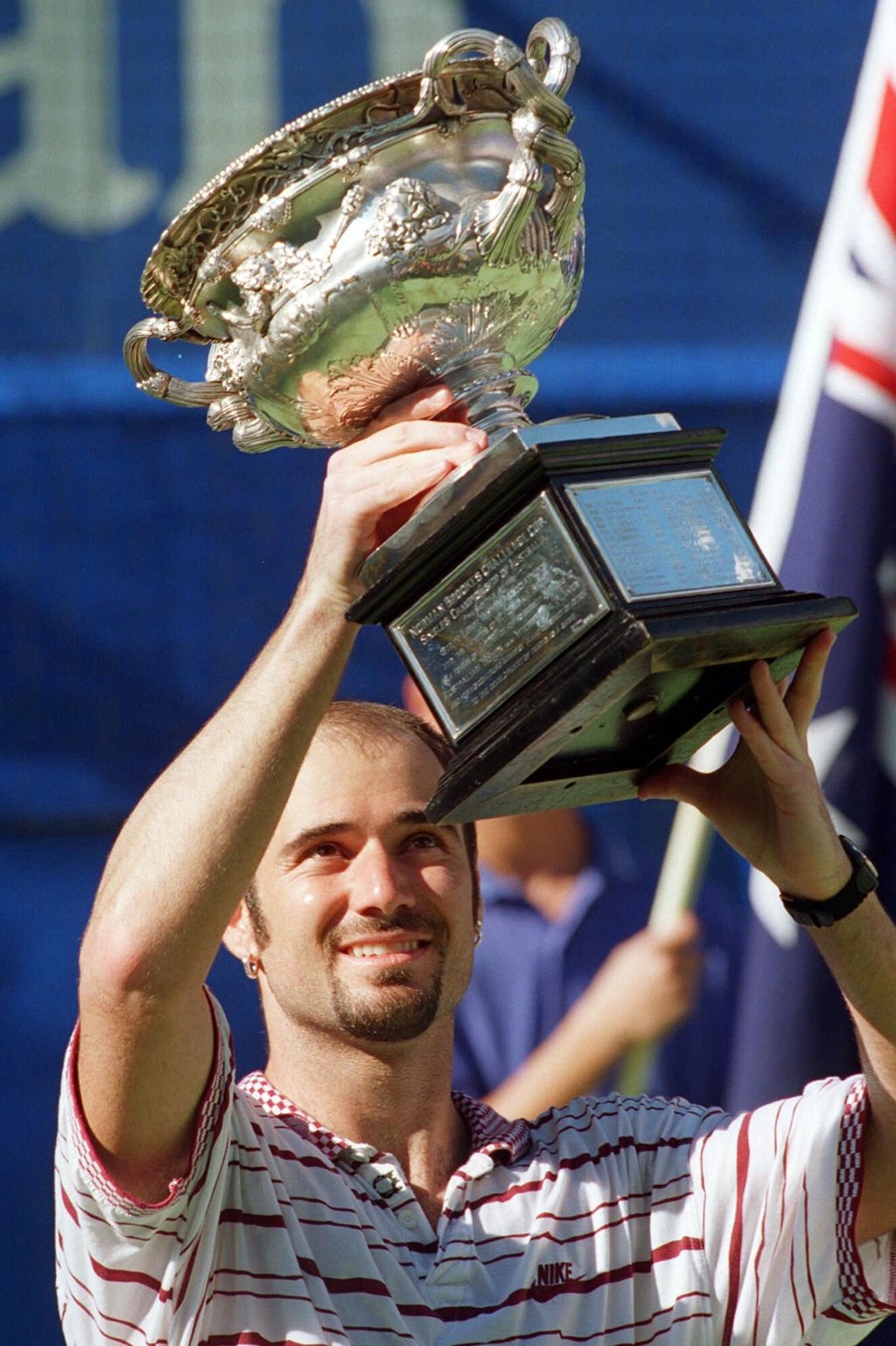
Andre Agassi holds his Australian Open trophy after defeating fellow American Pete Sampras in the final in Melbourne, in 1995. Photo: AP
Forced into the sport at a young age by his father, what Agassi felt he lacked then and throughout his life, was agency. “Tennis was never really my choice,” he says. At his peak, he felt at his lowest. “I wanted to quit tennis many times, but none more than that moment.” He speaks openly about the self-destructive spiral that followed: two years of what he calls “self-inflicting and destroying myself in a lot of ways”.