Yellowstone, America’s first national park, heeds the call of the wild
The evolution of Yellowstone is an experiment in ecological restoration starring wild wolves and bison

The distinctive, far-off yipping of a coyote reverberates off the hillsides, the undulating outlines of which are still shrouded in semi-darkness.
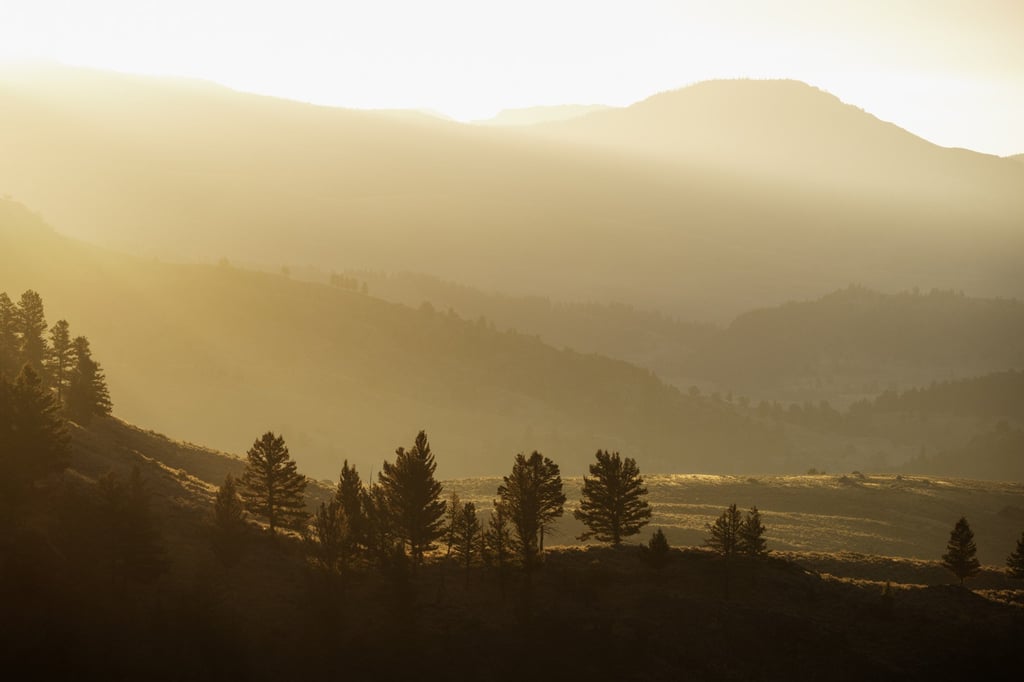
Despite the early hour, a small but growing group of people gathers on a bank overlooking the silvery ribbon of Buffalo Creek. All eyes, binoculars and telephoto lenses are directed towards a bend in the river, where a black lump sits motionless in the middle of the water, barely visible in the misty twilight.
“Dead buffalo bull,” whispers Hunter Graham, a wildlife guide who escorts tourists through the park all year round. “Look what’s on its back.”
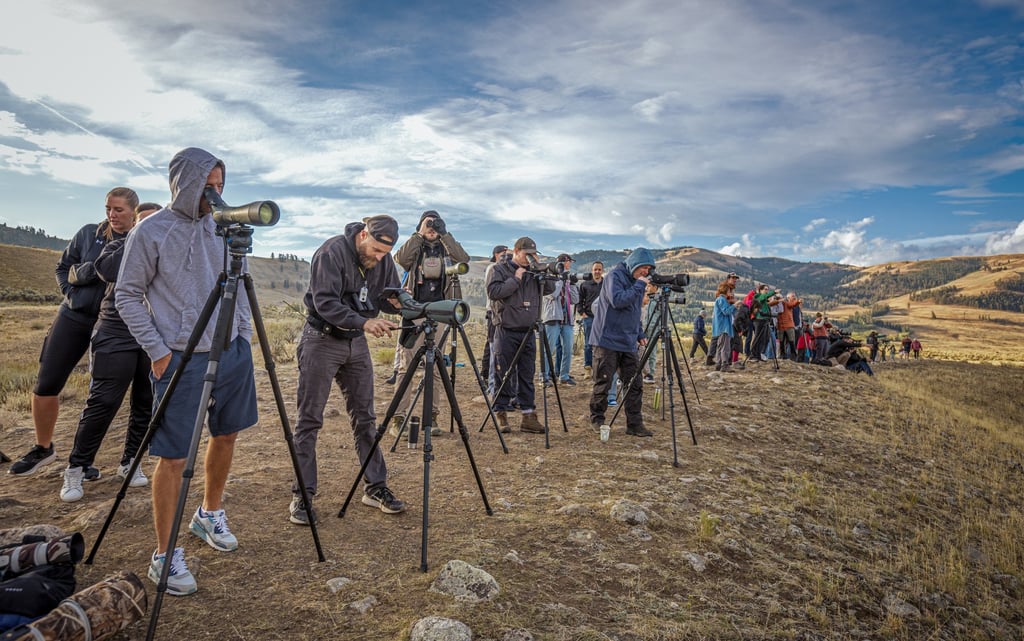
Standing on the half-eaten carcass is a jet-black female wolf, ears erect, almond eyes shining like liquid green fire. She stares at the hushed tourists for a full minute, then turns to chase off an impudent magpie and resumes tugging at a piece of hide. A bald eagle lands in a nearby tree, waiting for an opportunity to scavenge.
As a representative of the well-known Junction Butte pack, the young female captivates onlookers for a full 15 minutes, before trotting off downriver as dawn finally breaks. Yellowstone’s reputation as one of the best places to see apex predators in the wild has been upheld for another day.