Walking with lions: Inside South Africa’s Karoo safari and rewilding success story
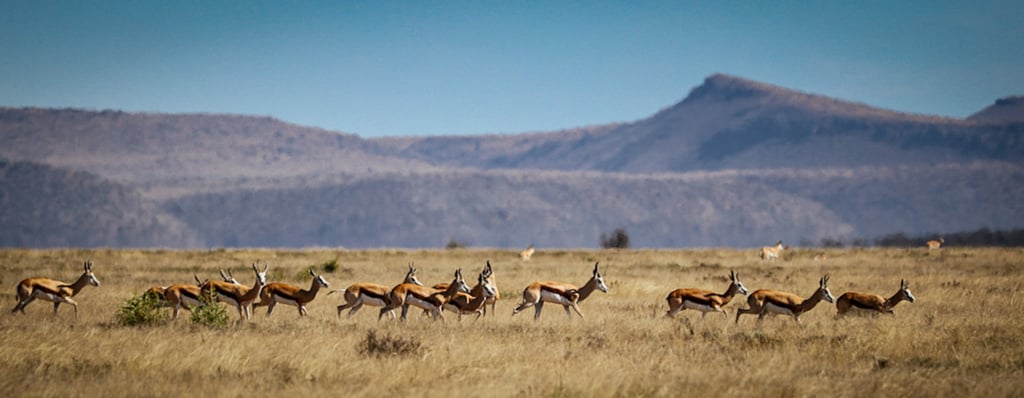
A century after the springbok vanished, lions and cheetahs now roam the Karoo’s restored wilderness once more

“The lion crossed this track shortly after dawn,” says Christiaan Swanepoel, our wildlife guide, squatting beside the deep pugmarks of what is clearly a very big male cat.
This is probably the same lion whose distant roar reverberated through the canvas walls of my safari tent early this morning. It is no surprise that the big cat would still be hunting, but I wonder how the tracker could be so exact in his estimate of the timing.
“He walked over these insect trails,” says Swanepoel, tracing a finger along some almost invisible dimples in the sand. “Grasshoppers don’t move until the sun has warmed them up.”
If a game drive is like watching a movie, then a bush-walk in the African wilderness is like reading the book – slower, deeper and full of fine details. It’s only when you’re in the company of a knowledgeable guide that you realise how much information can be gleaned from between the lines.
Swanepoel rises, his finger poised on the trigger guard of the high-calibre, bolt-action rifle that is standard issue for guides on walking safaris.
This particular book, with South Africa’s spectacular Karoo Desert as a setting, is starting to feel like a thriller. The hairs on the back of my neck tingle as I imagine the size of the lion that left those saucer-sized footprints. There’s something uniquely invigorating about being on foot in Big Five country. It’s the reason bush rangers refer to Africa’s tall rainy-season vegetation as “adrenaline grass”.