For China’s youth, traditional Chinese medicine is cool again
China’s youth are more focused on health and well-being compared to previous generations – and are embracing traditional medicine through viral trends, classes and treatments

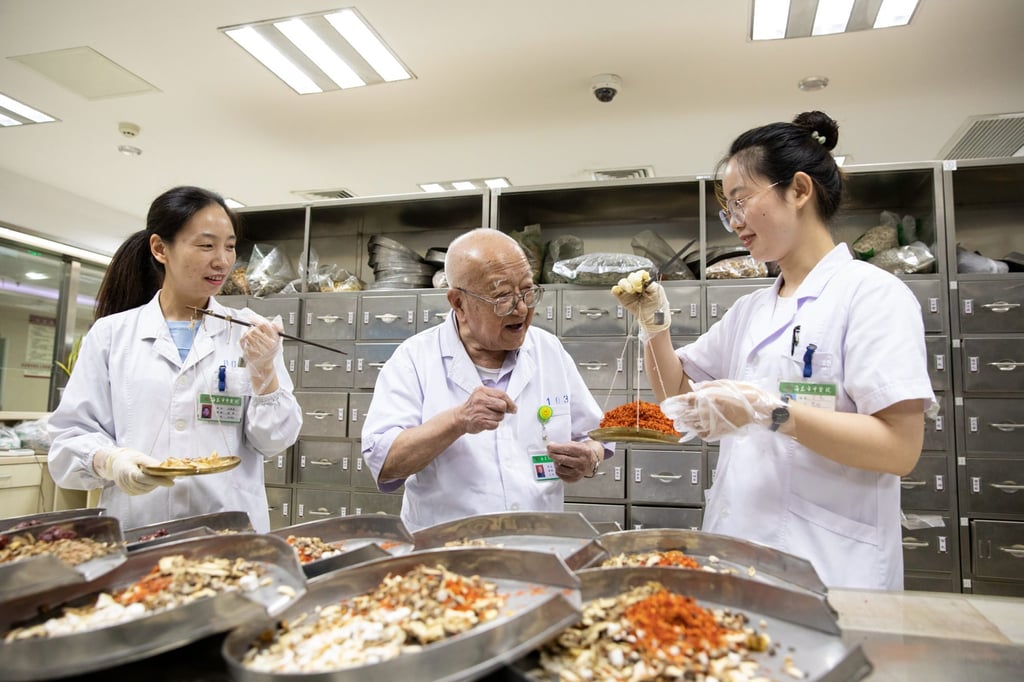
Once perceived as a less popular academic path, TCM programmes have seen a noticeable rise in admission scores across the country this year. At the Beijing University of Chinese Medicine (BUCM), the nation’s leading TCM institution, entry requirements for several programmes climbed significantly compared to the previous year. Similarly, the Guangzhou University of Chinese Medicine also reported a robust increase in minimum admission scores.
“I had decided to study TCM long before taking gaokao (the country’s annual university admissions exam),” said Zhang Honglin, an excited incoming freshman at BUCM. “As a former soccer player in high school, I struggled with recurring ankle ligament injuries – it was TCM that finally cured me.”
Rooted in classical Chinese philosophy that emphasises the harmony between humans and nature, TCM is increasingly capturing the appetite of younger generations. Young people are engaging with TCM like never before, from taking night classes to hopping on social media trends.
In east China’s Zhejiang province, a local TCM institution offers evening sessions in yijinjing – a traditional breathing and stretching exercise that quickly became a hit among working youth. Classes begin at 6pm and consistently run overtime due to popular demand.
“It’s common for our one-hour session to extend until 8pm because everyone is so engaged,” said Zhang Yimo, a TCM expert at the institution.