Recovery of Married Inspectors’ Quarters at Central Police Station compound

[Sponsored Article]
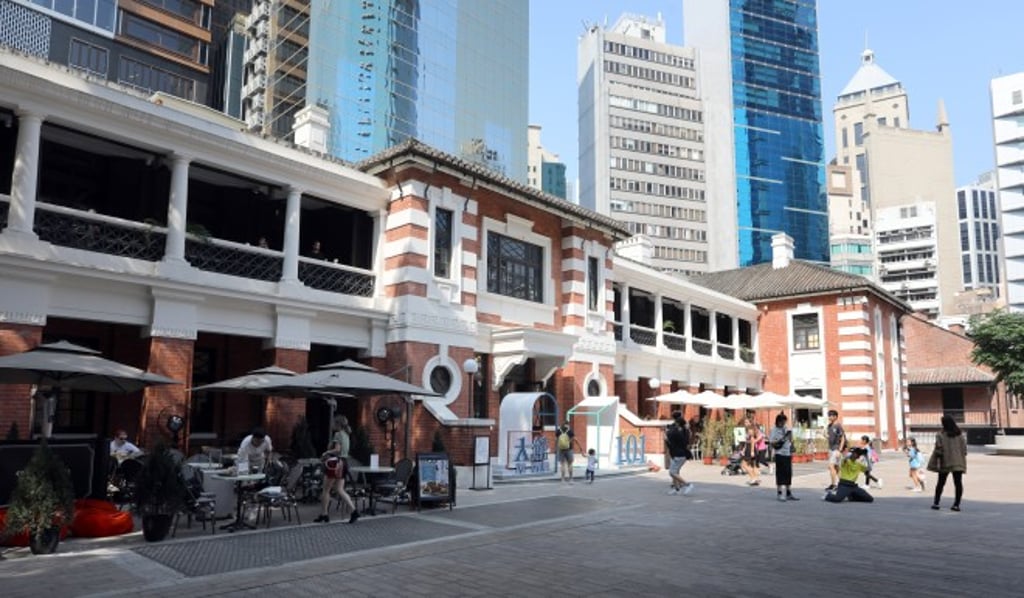
The Central Police Station compound (CPS) is one of Hong Kong’s most iconic heritage sites, comprising three declared monuments with a history dating back more than 170 years.
Working in partnership with the Government of the HKSAR, The Hong Kong Jockey Club has conserved and revitalised CPS as Tai Kwun – Centre for Heritage and Arts, opening it to the public in May 2018.
Of the 16 historic buildings at the site, 15 were restored and opened last year. The remaining building, the Married Inspectors’ Quarters (Block 4), sustained a partial collapse during restoration work in May 2016.
The Club aims to safely open Block 4 as an arts and cultural space for public benefits and allow participation from the community, while restoring it from heritage conservation perspective to meet modern safety requirements. In the recovery process, it is mindful of the need to strike a balance between work and public safety and heritage conservation.
Over the past three years, the Club and the professional team it appointed has explored and presented eight recovery options, which were subsequently narrowed down to three. It also sought the views of the Antiquities Advisory Board (AAB) and other stakeholders to identify the proposed recovery solution. Its overall design approach meets international conservation standards and has been accepted by the AAB.
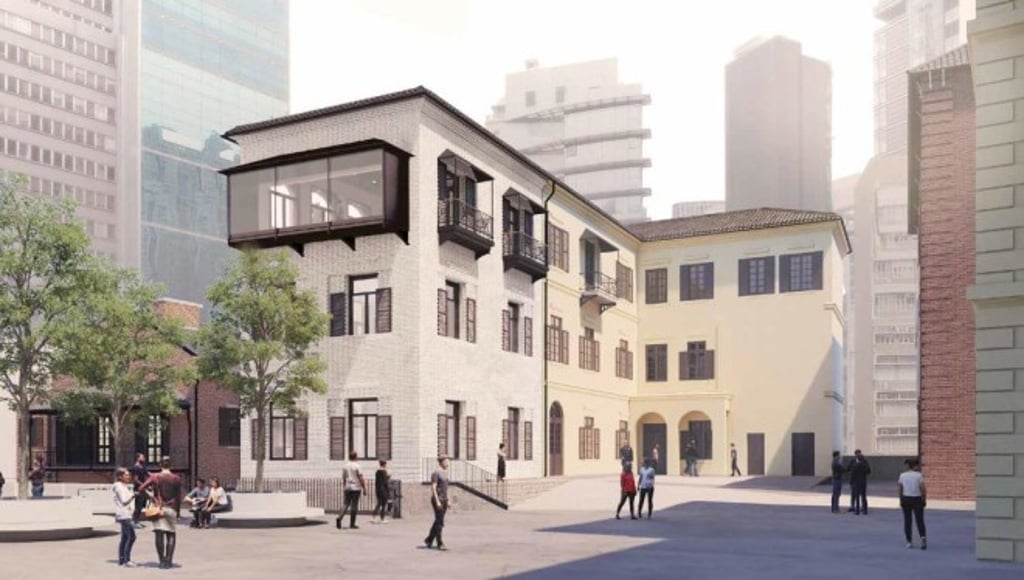
The recovery scheme aims to revitalise Block 4 as a venue for performing arts and exhibitions, benefiting a broad audience. The three-storey building will include a rebuild of the collapsed part on the original footprint. This will be a modest and contemporary expression of Block 4 that is designed to be compatible with the historic context of the compound.
Block 4 Recovery Plan
The latest recovery plan for Block 4 was proposed after rigorous reviews of structural engineering issues, assessment of related impacts on the building, and consultations with the Government. The Club also commissioned overseas masonry specialists and timber structure experts to conduct detailed inspections of the building. It was concluded that the building’s brickwork and timber structures were in very poor condition.
In addressing the construction challenges brought about by the poor condition of the building, the Club will uphold the same conservation principles that it used throughout the revitalisation of CPS. That is safety, authenticity with respect to the original appearance, and the integration of old and new architecture, with the overall objective being to restore the building for adaptive reuse as a new cultural space for public enjoyment.
Conservation principle 1: Safety
Safety is the most important principle that underpins all work at CPS. While adhering to the principle of “changing only as much as necessary and as little as possible”, the Club has made extensive efforts to ensure that buildings can be preserved and revitalised while complying with modern safety requirements. A series of structural strengthening measures will be put in place at Block 4 to ensure the safety of workers, staff and visitors during the building work and after completion. Building options have been carefully considered to ensure that significant heritage features can be preserved while allowing safe public use.
Conservation principle 2: Authenticity
Preserving the original design, materials, craftsmanship and features of a building enables visitors to appreciate their character and architectural style. The recovery plan will conserve key architectural features of Block 4, most notably the facade of the extant part. Some elements will be lost due to the need to comply with modern building safety standards. Materials will be salvaged as much as possible for reinstatement or reuse, which will help with the interpretation of Block 4’s history.
Conservation principle 3: Integrating old and new architecture
Giving new life to historic buildings is a crucial part of heritage conservation and revitalisation. The integration of old and new architecture is imperative as the two should be distinguishable but also stand in harmony within the site. The recovery plan for Block 4 aims to rebuild the collapsed part with a modestly discernable facade in a way that respects the heritage fabric. The design is a modest and contemporary expression of Block 4 while retaining the historic context of the building.
The recovery plan for Block 4 is the product of a careful and considered evaluation of the options available. It utilises the same conservation approach as for other heritage buildings at CPS, its guiding principles being authenticity, integration of old and new, and safety. The plan also reflects the Club’s approach to heritage revitalisation, which seeks both to preserve historic buildings and give them new life for public use in a sustainable manner.
In its first year of operation, Tai Kwun attracted 3.4 million local and international visitors and staged more than 750 public programmes and events. It has also been very positively received both in Hong Kong and internationally. It recently won the Award of Excellence in the 2019 UNESCO Asia-Pacific Awards for Cultural Heritage Conservation, which is the awards’ highest honour. The awards’ international jury of conservation experts recognised the Club’s innovative architectural solutions and diverse and creative programming. The award affirms the Club’s pursuit of excellence and world-class quality in revitalising and conserving the historic CPS compound. The Club will continue to uphold the same high standards in the revitalisation of Block 4, the aim being to provide a unique cultural space that the public can enjoy for years to come.