Are Hong Kong’s tiger parents harming their children’s futures by pushing them too hard?
To lessen the long-term impacts of strict parenting, experts advocate healthier relationships between parents and children

Maths on Monday, taekwondo on Tuesday, piano lessons on Wednesday, creative writing on Thursday and swimming on Saturday. No, this isn’t a schedule of activities offered at your local community centre, but a typical week of extracurriculars for a student in Hong Kong on top of their regular academic curriculum, usually planned by a so-called “tiger parent” or “helicopter parent”.
Used to describe parents who are too strict, protective and intensely involved in their children’s lives – with an extreme focus on academic performance and high-status extracurricular activities (ECAs) – tiger parents are especially prevalent in Hong Kong and the rest of Asia, where huge value is placed on academic achievement.
“When I first moved here 13 years ago, tiger parenting was more ubiquitous, thanks in part to Amy Chua’s book, Battle Hymn of the Tiger Mother,” says Dr Melissa Ortega Giglio, clinical psychiatrist at Central Health’s child development team. “However, new parenting styles have emerged and become more attractive and mainstream.”
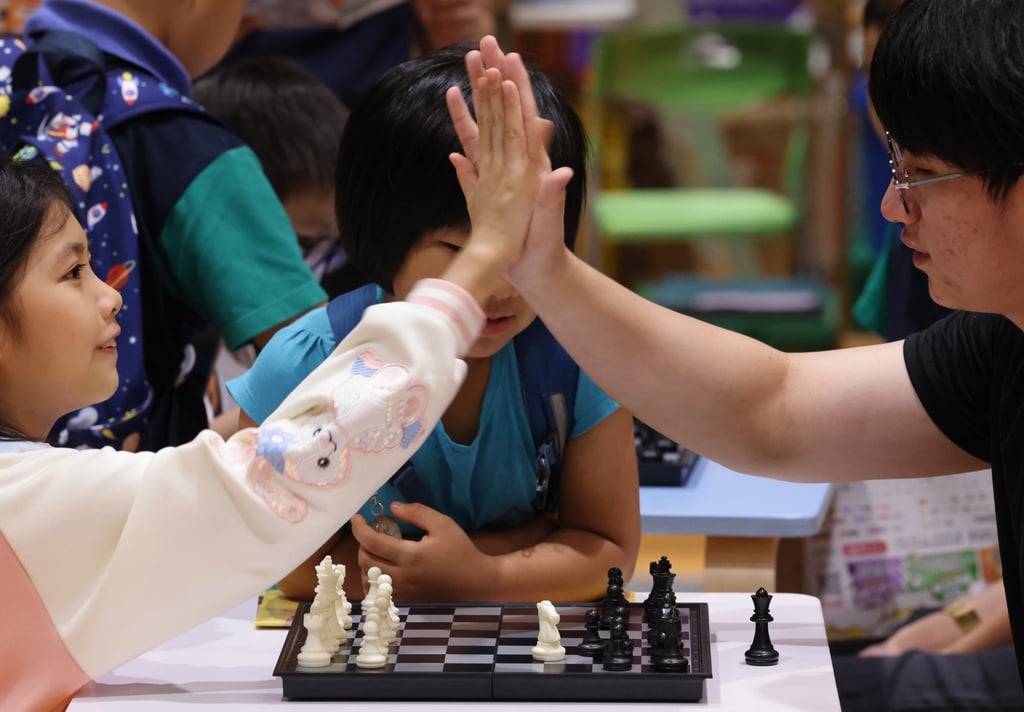
For Brenda (whose name has been changed for privacy reasons), a mother of three and international school educator in Hong Kong, “Tiger parenting is still very common. Parents send their children to all sorts of classes from a young age, even when they’re just one or two years old. I’d say that 80 per cent of our students are involved in some kind of ECA.”
Despite its negative connotations though, Brenda also points out that tiger parenting usually comes from a good place. “Parents genuinely care and want their kids to have a head start in life,” she explains. “Some are more relaxed than others and send their kids to ECAs because they want them to spend their time more productively than just playing video games at home. Others are a lot stricter and have high expectations – wanting them to get into exclusive programmes like a school’s gifted programme, for instance.”
Tiger parenting can be gruelling for children, who are often put through many hours of private tutoring, which are crammed into after-school hours and weekends, not only for academic subjects but for sports, music, languages and the arts as well. Those who perform well could consider themselves lucky to receive praise, given the stereotypical cultural reluctance of Asian parents to heap compliments on their children, while those who fall short of their parents’ exceptionally high standards might be scolded, or even worse, shamed.
“Hong Kong students face a lot of pressure to meet society’s expectations – whether it’s the school’s, their teachers’ or their parents’ – and I feel for them,” says Brenda, who has seen these scoldings first-hand. “It breaks my heart, and we try as much as possible to encourage parents to be supportive and positive instead of judgmental and overly critical.”