Advertisement
Good Schools Guide
Special Reports

Hong Kong forest schools are embracing ‘risky play’ for children as young as 2

Malvern College and International College believe in the power of outdoor learning and growing in nature’s classroom to build curiosity and resilience

Reading Time:4 minutes
Why you can trust SCMP
Forest schools such as International College Hong Kong Hong Lok Yuen (ICHKHLY) offer manifold educational and mental benefits. Photo: Handout
Jacqueline Kot

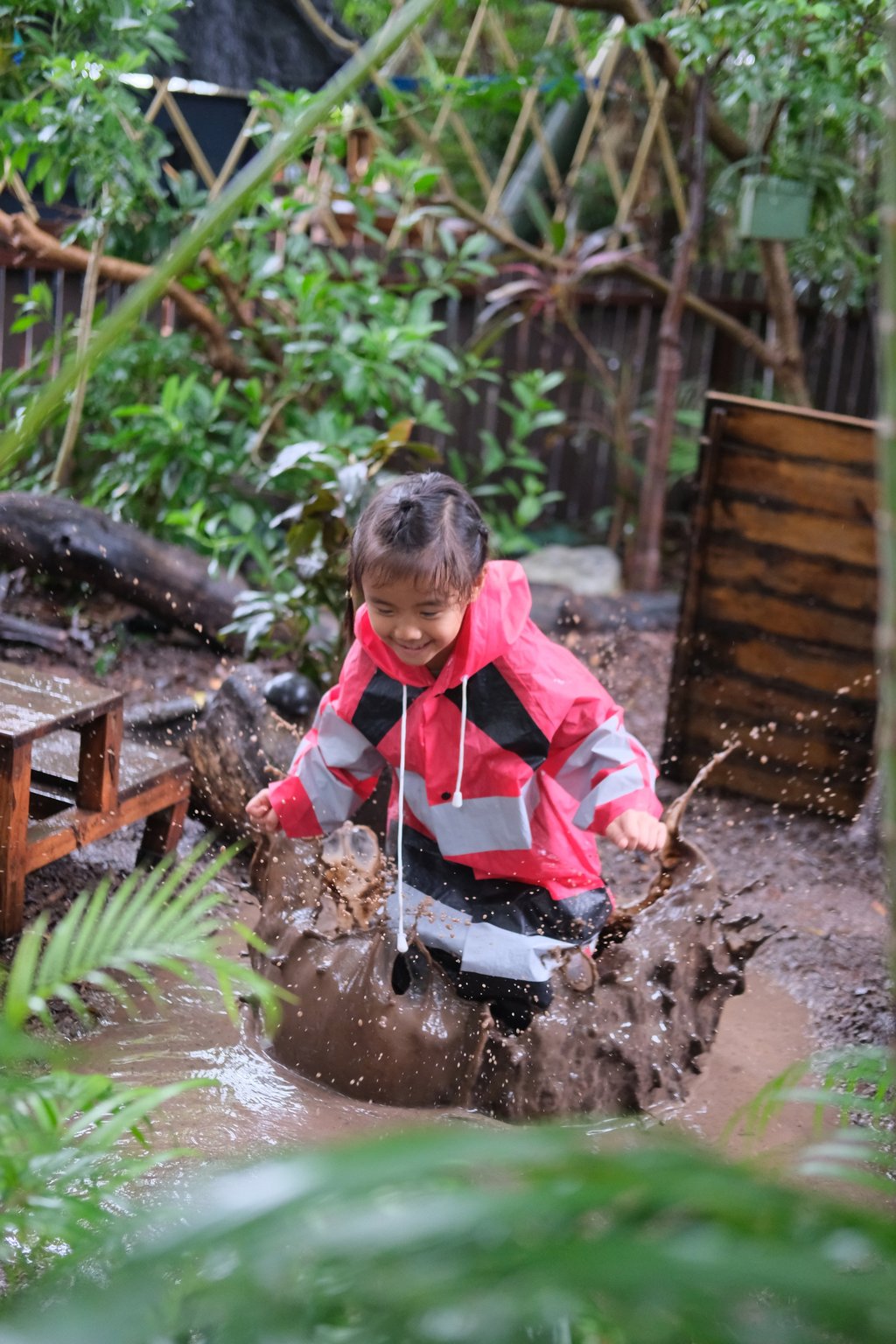
Imagine a classroom with no walls, where instead, trees provide a natural border of sorts, and air conditioning and lights are replaced by fresh air, breezes and unfiltered sunlight. Where children are free to jump, climb and make a mess – all on a normal weekday at school.

Outdoor learning has long been a popular concept in Scandinavia, with children encouraged to develop their critical thinking and learn about nature and biodiversity through play and activities in real-life settings.

Some of the activities can be perceived as somewhat risky but this is all seen as part of the learning process that will help children build resilience.
Advertisement
In Hong Kong, schools like Malvern College Hong Kong and International College Hong Kong (ICHK) are also embracing outdoor learning for young students: Malvern College Pre-School Hong Kong (MCPS) runs a Forest-Beach School programme as part of its curriculum, with teachers certified by the UK-based Forest School Association. And ICHK’s school for kindergarten and primary students in Hong Lok Yuen (ICHKHLY), in the northeastern New Territories, runs an outdoor education programme that has been accredited by the Forest Schools Leadership Centre, also based in the UK.
A pupil at International College Hong Kong’s outdoor campus for younger students gets hands on with nature. Photo: Handout

“Outdoor learning promotes the holistic development of children across academic, social, emotional and physical domains. It allows them to engage with their environment in ways that foster curiosity and resilience,” says Emma Dean, leader of the Forest-Beach School at MCPS.

Advertisement
Advertisement
Select Voice
Choose your listening speed
Get through articles 2x faster
1.25x
250 WPM
Slow
Average
Fast
1.25x