Superflat’s 25-year journey from Tokyo to Louis Vuitton and Labubu
From Tokyo’s anime aesthetic to Hong Kong’s latest art toy craze, the Superflat style has spawned a host of cultural phenomena

“Superflat is a contemporary hybrid form of artistic representation which draws inspiration from the two-dimensionality seen in the traditional ‘Nihonga’ style and from Japanese pop cultural elements like manga, anime and the larger otaku subculture,” says Danielle So, Hong Kong head of auctions, modern and contemporary art at Phillips. “It’s also often seen as a comment on the media, entertainment and consumption that’s abundant in Japanese culture.”
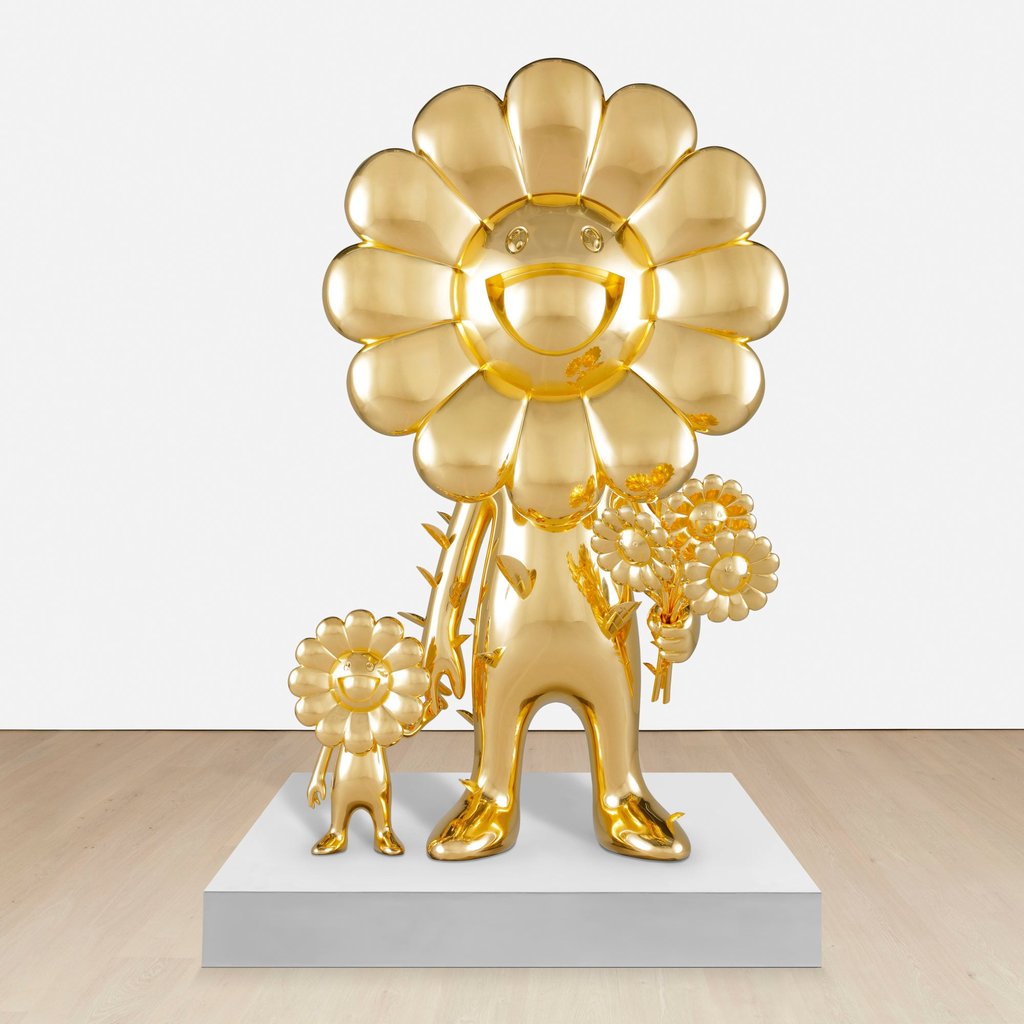
“Murakami, of course, was the progenitor [of Superflat] with the creation of a strange, imaginary world of iconic characters, including his smiling, psychedelic Mr DOB, Kaikai Kiki, and his army of enchanted mushrooms, eyes and flowers,” adds So. “Murakami argued that a distinct ‘flat’ aesthetic – devoid of Western-style perspective and depth – permeated all levels of Japanese visual culture … as an attempt to expose the shallow emptiness of Japanese consumer culture.” However, So adds that other Japanese artists have contributed to the movement’s popularity, including Yoshitomo Nara, Aya Takano and Chiho Aoshima.
But Superflat isn’t the first art movement to offer commercial commentary and use these visual cues. Experts point to the similarities Superflat shares with the pop art movement popularised by artists like Andy Warhol and Roy Lichtenstein in the 1960s. “Pop art was born as a response to post-war affluence and the advertising born in the US, while Superflat was an exploration of how the Japanese retreated into fantasy after World War II (with the atomic bombs and defeat) and the subsequent economic bubble,” So continues.