A taste of the Philippines in Macau: bold flavours – and community
Macau’s Filipino community unites around much-loved dishes like adobo and halo-halo, served in eateries heady with the feel of home

Walk down Rua da Alfândega and you hear Tagalog. You smell garlic, vinegar and pork frying on stoves. You see queues outside bakeries and canteens serving unfamiliar treats. Here, in the heart of Macau, the Filipino community has built a home.
Filipinos are Macau’s largest non-Chinese nationality. It was estimated earlier this year that close to 31,000 live and work in the city, making up about 4.5 per cent of the total population. Many are domestic workers. Others are teachers, musicians, business owners and healthcare staff. Their presence shapes many aspects of the city’s daily life.
Why do so many Filipinos come to Macau? Proximity matters. Manila is a two-and-a-half-hour flight away. Macau’s visa rules are friendly. The city is walkable, less hectic than Hong Kong or Tokyo. Most of all, Macau is open. People practise their faith, celebrate their festivals and find space to breathe.
The Filipino community here is tight-knit. The bayanihan spirit – helping each other, working for the common good – runs deep. Edna May Lazaro, Philippine consul general, calls it “part of our DNA”. You see it in the way Filipinos organise festivals, support each other and keep traditions alive.
Rua da Alfândega stands at the centre. Locals call it Pinoy Street, and it is only a short stroll from tourist hotspot Senado Square. Here you find sari-sari shops – convenience stores – remittance agencies, salons and, above all, food. Food is the glue, comforting, connecting and telling the story of migration.

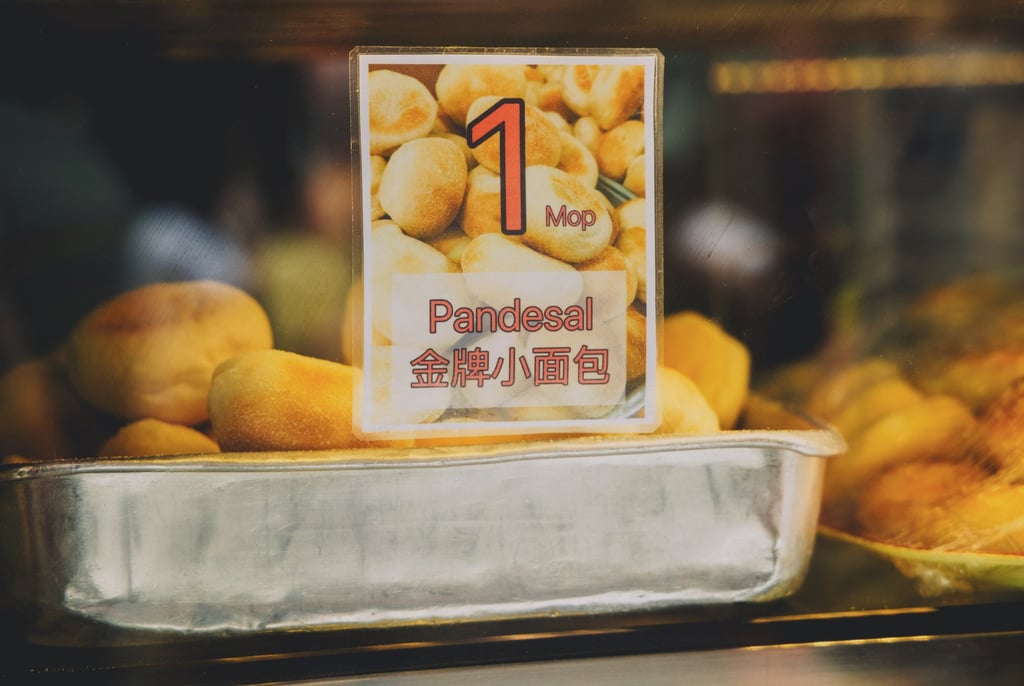
Take Anak Philippine Bread. Open since 2003, it sells pandesal, the soft bread roll that tastes like home to many Filipinos. One pataca (approximately HK$1) buys you a roll. Ube cheese pandesal costs a bit more. Ari Calangi, a musician born in Macau, remembers the excitement when the bakery opened. “We finally had a steady supply of pandesal,” he says. For many, a bite brings back memories of family breakfasts and childhood.
Next door, canteens like Lutong Bahay and Sarimanok serve silogs – breakfast plates with garlic rice, eggs and sweet cured meats. You see workers on a break, students grabbing a quick meal, and families sharing lunch. The prices are low; the food simple, familiar and filling.
Stanley Lei, a local who opened Filipino restaurant Cusina Filipina in 2024, saw how authentic Filipino food was rare and expensive, plus most locals only knew dried mango. Lei wanted to change all that. His restaurant offers carinderia-style comfort food – kwek kwek (fried quail eggs), lumpiang (spring rolls), and halo-halo (shaved ice dessert) – at prices that fit most budgets. Their 14-inch Pinoy-style ham and cheese pizza costs 50 patacas. Street food starts at 10 patacas a serving.
Lei’s menu is rooted in tradition but adapted for Macau. He cuts the amount of sugar in the barbecue glaze, uses Hong Kong curry oil for chicken, and braises adobo with Chinese hong shao sauce for colour and spice. “Tradition is our anchor; localisation, our sail,” he says.
Internationally, the Philippines’ culinary culture is finally gaining long-overdue recognition. In 2023, Iloilo City, some 500 kilometres south of Manila on the island of Panay, was named a Unesco City of Gastronomy. Local Ilonggo specialities such as chicken inasal, pancit mol and la paz batchoy have spread across the Philippines, enjoyed whether at street stalls or formal functions. Food is vital to life everywhere, but in Iloilo those words carry extra meaning – during the Covid-19 pandemic, the local government launched a “Kitchen Patrol” programme that distributed more than 90,000 traditional meals to the underprivileged and socially isolated.
That communal aspect of Filipino food is part of what makes it so special. Dishes are meant for sharing. Boodle fights or kamayan – grilled fish, rice and pork laid out on banana leaves – are eaten with hands. Flavours are bold: adobo’s garlic and vinegar, sisig’s crunch and chilli pepper heat, halo-halo’s sweet chaos. Key ingredients include garlic, red onion, calamansi, bay leaves, black pepper, tamarind and cumin. Everything is fresh. Spices are pounded, squeezed or toasted only when needed.
“Spices are conversations between land and pot,” says Lei. “Grind them fresh, or miss the story.”
Food is more than sustenance. It is a way to connect. Lei describes locals learning how to eat halo-halo from Filipino diners. “Crush the ice, swirl it all – magulo [messy] is fun!” he tells them. On birthdays, employers order yema cake and party trays for their Filipino helpers. One nanny cried: “How did they know I missed this?” Food here feeds the soul, as well as the stomach.