The evolution of Macanese cuisine, from Portuguese roots to global flavours
Born from global exchange, Macanese cooking fosters connections and reflects the city’s multicultural soul


“Sharing food at a table has always brought people together,” says Fernando Gomes, owner of Fernando Restaurant located just off Hac Sa beach. “And when you have so many different communities interacting and sharing their own tastes and ways to experience food as in Macau, that fusion is bound to happen quite often in more than gastronomical terms.”
Preserving Macau’s culinary heritage is critically important – not only as a matter of cuisine, but also as an essential component of cultural diversity
Fernando’s, as the restaurant is colloquially called, opened in 1986.
“We’ve known grandparents who came in for dinner as a young couple, then later brought their children for lunch. Now, those children have grown up and are bringing their own kids,” he says.
“We believe we foster a sense of living history, presence and belonging – and bonds between families and in the community.”
Gomes serves a dish of clams Fernando’s style – cooked in a coriander-heavy sauce – the first dish he served when the restaurant initially opened years ago. “Coriander is present in Asian, Indian and European cooking. The dish is still one of our hits,” he says.
Gomes has also created a dish that is a homage to multicultural Macau. Called camarejo, a name created from the combination of the Portuguese words camarão (shrimp) and amêijoas (clam), the dish combines the seafood with a spicy sauce inspired by the tangy flavour of the bell peppers from his homeland, the Azores.
“The dish was born very instinctively. It’s my own take on different culinary influences and tastes: the chillies from Portuguese-African cuisine, and the cooked garlic lending a slightly sweet, caramelised taste of Asian cuisine,” he says.

Florita Alves of La Famiglia, which serves homestyle Macanese and Portuguese cuisine, agrees and says gathering around a nicely set table loaded with dishes is a big part of Macanese culture.
“Sharing Macanese dishes, with their nostalgic flavours and childhood memories, with friends who are not acquainted with Macanese culture, is a great way to foster interaction,” she says.
She points to the sweet and sour dish porco balichão tamarindo as an example of how Macanese dishes bring together different cultures. The dish combines Portuguese cooking techniques with flavours from India, Malaysia and China, with the balichão (a fermented shrimp paste) giving an umami punch to the tang of the tamarind, and bay leaves adding an aromatic depth.
“It has a very complex flavour profile due to the spices and the cooking method,” explains Alves.
Manuel Cozinha Portuguesa in Taipa primarily serves traditional Portuguese cuisine, but chef and co-owner Palmira Pena says that she frequently receives special requests for Macanese dishes. She believes it is important for people to know that Macanese cuisine is much more diverse than just minchi.
“Preserving Macau’s culinary heritage is critically important – not only as a matter of cuisine, but also as an essential component of cultural diversity,” she says.
Macanese cuisine encompasses a wide variety of recipes, including dishes such as pork bafassá (pork roasted with turmeric), capela (a doughnut-shaped meat loaf), and tacho (a hearty casserole). Pena says pork bafassá is an excellent example of Macanese fusion cuisine as the dish combines Eastern and Western ingredients, such as white wine, bay leaves, turmeric and various other seasonings.

“Whenever customers show interest in these traditional dishes, I’m always pleased to prepare them and heartened to see ongoing appreciation and respect for Macanese culinary heritage,” she says.
Tradition is, of course, always changing, and innovative chefs in Macau – especially at the fine dining level – are taking Macanese cuisine in new directions.
“To me, tradition is not a constraint – it’s a foundation,” says chef José Avillez of contemporary Portuguese restaurant Mesa by José Avillez. “As chefs, we inherit centuries of knowledge, technique and soul. But we are also creators and it’s our responsibility to keep traditions alive by making them evolve.
“I believe the secret lies in respect: understanding the story behind each dish, ingredient, or technique – and then asking, what can I add that’s meaningful?”
At Mesa, Avillez uses Macanese cuisine as a cultural bridge between heritage and innovation.
One of the ingredients in Macanese cuisine that Avillez particularly appreciates is cinnamon: “It’s used in both sweet and savoury preparations, often adding warmth and complexity to dishes with multicultural roots,” he says.
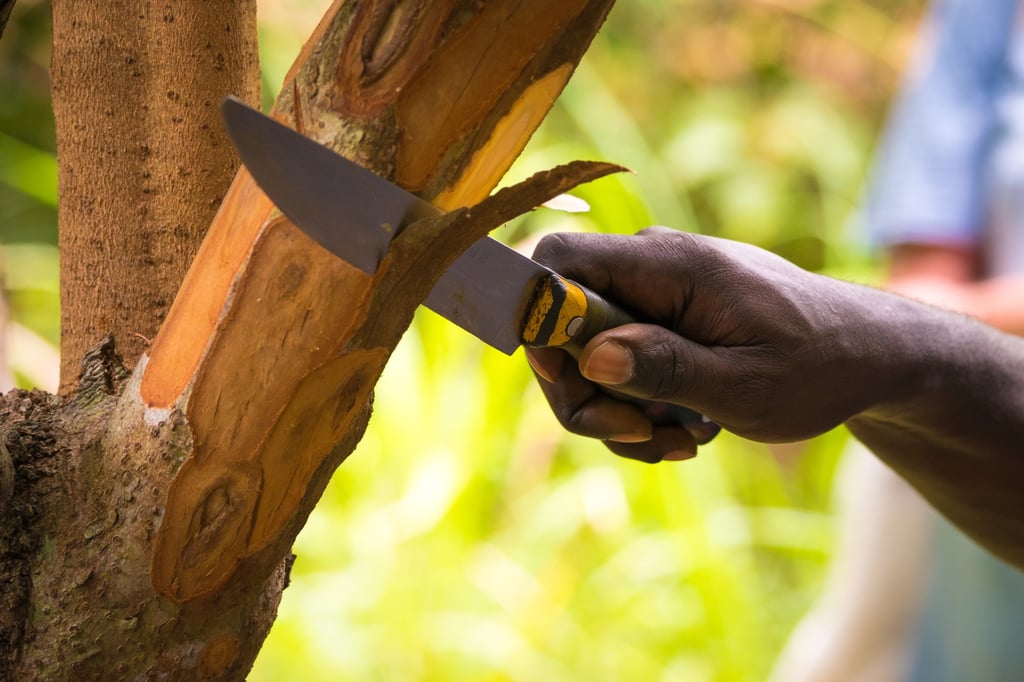
He uses the spice in a duck rice dish inspired by arroz de pato – duck and rice cooked in a rich broth, in which he infuses the slow-cooked stock with cinnamon sticks. The result is subtle but powerful.
“It adds a nostalgic depth, a whisper of the spice routes and a connection to Macanese dishes such as galinha à Africana or minchi, where cinnamon might appear unexpectedly. It’s that kind of layered flavour that stays with you,” he says.
He also, like Gomes, makes use of fresh coriander, a herb he says is essential in both Macanese and Portuguese kitchens. He uses coriander in a dish inspired by arroz de marisco, a simple stew of seafood and rice. In his elevated version, the coriander is infused into an oil that finishes the dish.
“It lifts the flavours, gives freshness and connects both culinary worlds. It’s a simple herb, but in the right context, it becomes a signature,” he says.
While in the hands of local and international chefs Macanese cuisine continues to evolve, Gomes says one important tradition should not change: eating at the table with family and friends.
“Sharing, talking, being together and focusing on each other, regardless of the particular nationality of the dish” – or indeed the nationality of the diner – this is something worth preserving,” he says.