Chinese robotaxis race Waymo to take driverless cars global
Baidu’s Apollo Go, WeRide and Pony.ai are outnumbering their US counterparts with more projects in various stages of commercialisation

American companies led by Alphabet’s Waymo have drawn much of the limelight with driverless cars deployed almost entirely on home soil. Now that some are beginning to look abroad, they’ll have to share roads with Chinese companies quietly making plenty of progress.
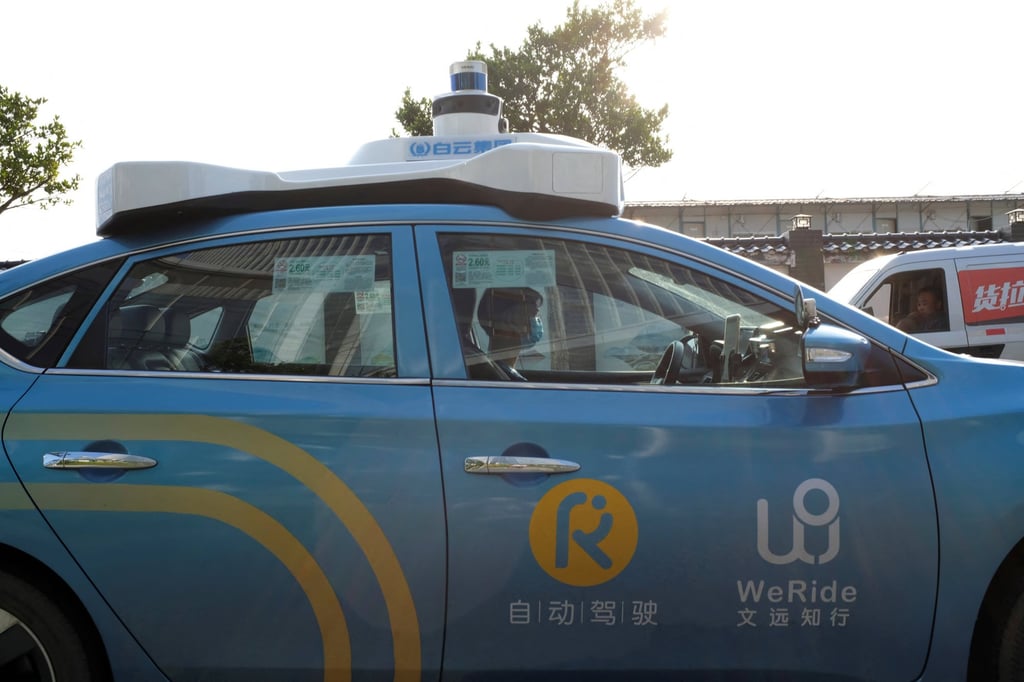
Baidu’s Apollo Go, WeRide and Pony.ai are outnumbering their American counterparts with more robotaxi projects progressing from testing to various stages of commercialisation, according to a BloombergNEF analysis. While much of that headway is being made domestically, the Chinese companies are standing up operations in places like Dubai, Abu Dhabi and Singapore, and looking to launch in Germany, the UK and elsewhere in Europe.
Comparing autonomous vehicle companies’ progress is not a straightforward exercise – the industry has been synonymous with false dawns and unfulfilled promises. Players that have looked promising and raised billions at rich valuations have been doomed by singular crashes they never recovered from, or been cut off by benefactors that have lost patience.
But if the state of batteries and electric vehicles proves anything, it’s that Beijing is willing to devote untold sums to strategic sectors that require fortitude to conquer. The dominant EV industry that China has built over decades is now among the potential advantages its autonomous vehicle companies may have over Waymo and US hopefuls including Tesla and Amazon.com’s Zoox.
“In the US, it’s been more market-driven. In China, most of them are government-driven,” said Weisong Shi, a professor at the University of Delaware and director of its Connected and Autonomous Research Laboratory. “Technology-wise, it’s very difficult to say who is ahead or behind, but none are good enough” to operate in inclement conditions like significant snowfall, he said.
Autonomous-driving technology is considered a strategic sector by Beijing, which has set out a policy that aims for China to become the world leader in driverless vehicles by 2035.