Alibaba doubles down on healthcare AI with new tool for early colorectal cancer detection
Damo Academy says its Coca AI model accurately identified five previously missed cases from scans of more than 27,000 people

Alibaba Group Holding has released an artificial intelligence model that it claims is more sensitive than radiologists in spotting early stage colorectal cancer from computed tomography (CT) scans, as the Chinese tech giant doubles down on its efforts to develop AI tools for cancer detection.
Alibaba’s research arm Damo Academy said on Tuesday that its new Coca AI model accurately identified five previously missed cases of colorectal cancer from the non-contrast CT scans of more than 27,000 people, achieving a sensitivity of 86.6 per cent and a specificity of 99.8 per cent. Alibaba owns the South China Morning Post.
Sensitivity measures a system’s ability to correctly identify people with a disease, while specificity shows its ability to identify healthy individuals.
Damo Academy said that Coca, developed with Chinese institutions including the Guangdong General Hospital, demonstrated a significantly higher sensitivity compared with 10 radiologists of varying levels of experience, outperforming them by 20.4 per cent.
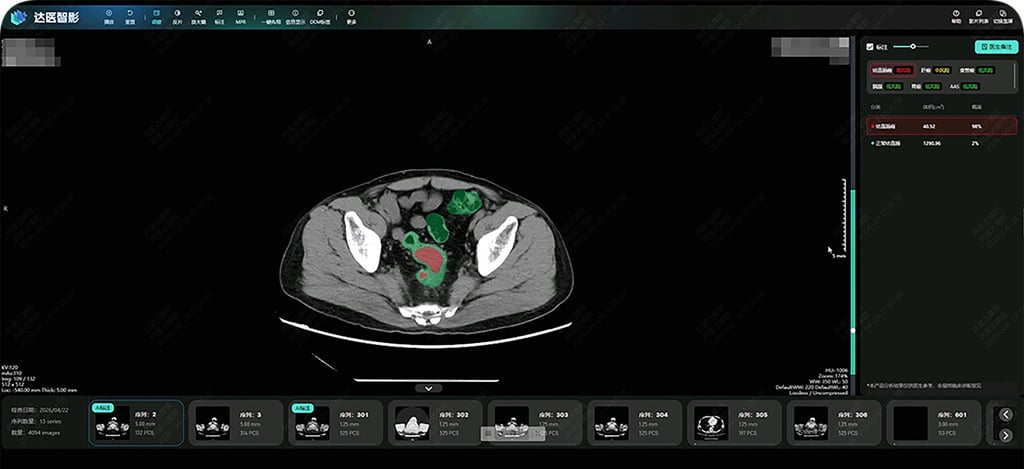
Current diagnostic methods for colorectal cancer detection, including colonoscopy and CT colonography, were invasive and created discomfort for patients, whereas Coca had the potential to be a non-invasive, cost-effective and scalable tool, Damo researchers said in a paper published in the Annals of Oncology peer-reviewed medical journal last week.