Advertisement
Could US troop cuts in South Korea become reality? Seoul on edge before June 3 election
The Pentagon has denied reports of a drawdown, but analysts say it remains possible given Washington’s shifting defence priorities
3-MIN READ3-MIN
4

Talk of a possible US troop reduction in South Korea is fuelling anxiety in Seoul ahead of the June 3 snap presidential election, with analysts warning that Washington’s shifting defence priorities could reshape the alliance amid rising regional tensions, posing an early test for the next administration.
With just over a week until South Koreans head to the polls, concerns have been reignited over the long-debated issue of “strategic flexibility” – the idea that US Forces Korea (USFK) might be redeployed to respond to regional conflicts beyond the Korean peninsula.
Such a shift, some analysts warn, could erode South Korea’s deterrence posture against North Korea and entangle it in wider US-China rivalries.
The controversy was stirred by a media report last week suggesting Washington was mulling a plan to reassign some 4,500 of its 28,500 troops stationed in South Korea to other Indo-Pacific locations, including Guam. The Pentagon swiftly denied the claim.
“Reports that the Department of Defence will reduce US troops in the Republic of Korea are not true,” chief Pentagon spokesman Sean Parnell told the Wall Street Journal, adding that the United States remained “firmly committed” to South Korea’s defence and to strengthening the “ironclad alliance”.
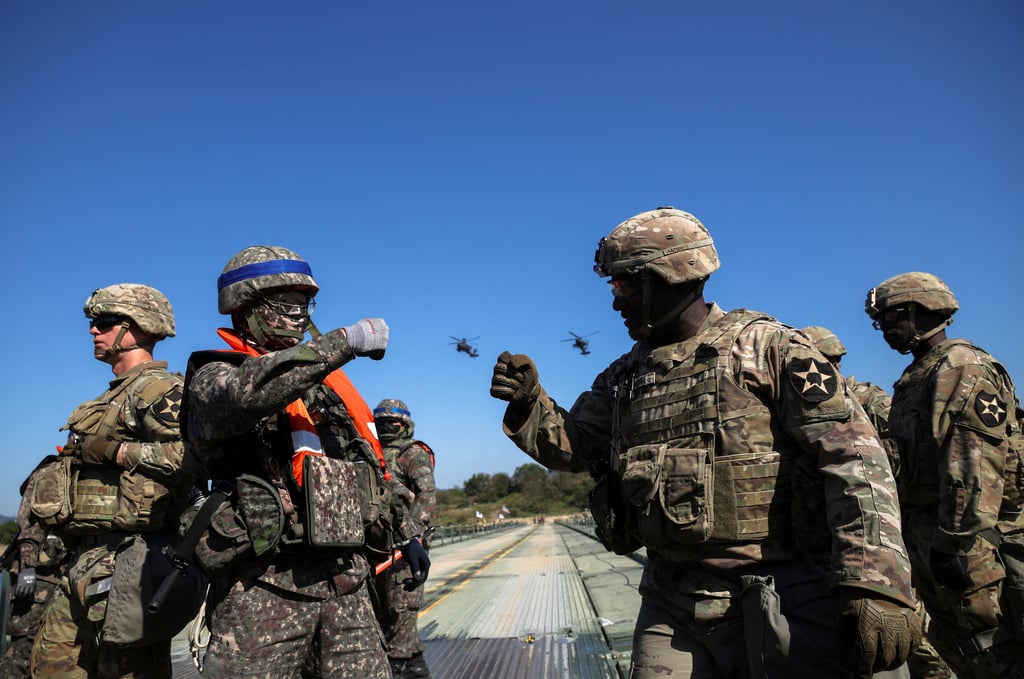
Still, concerns persist in Seoul that changes could be coming – and not just under the guise of regional flexibility.
Advertisement
Select Voice
Select Speed
1.00x