Advertisement
Revived Silk Route allows US to steam ahead of China, Russia in South Caucasus
The Trump-brokered Armenia-Azerbaijan peace deal, which gives the US an interest in the ‘Zangezur Corridor’, shifts regional power dynamics
4-MIN READ4-MIN
4
Listen

The shortest Silk Route between China and Europe is set to reopen for the first time since the collapse of the Soviet Union, following last Friday’s agreement between Armenia and Azerbaijan to end the conflict that had been blocking the way.
Ironically, the obstacle was cleared by China’s nemesis, United States President Donald Trump: his administration’s involvement was key to pushing the framework peace deal across the finishing line.
Shoehorned last minute into negotiations by Azerbaijan’s close ally Turkey, the US took on the role of security guarantor for Armenia in return for a lease to develop and operate the so-called Zangezur Corridor, a route linking Azerbaijan to its Karabakh enclave via a strip of Armenian territory bordering Iran.
Advertisement
Dubbed the Trump Route for International Peace and Prosperity, the proposed project represents the first major US involvement in the South Caucasus since a 1994 contract with an international consortium that set Azerbaijan on the path to becoming a major oil and gas exporter – via pipelines through Turkey, rather than Iran or Russia.
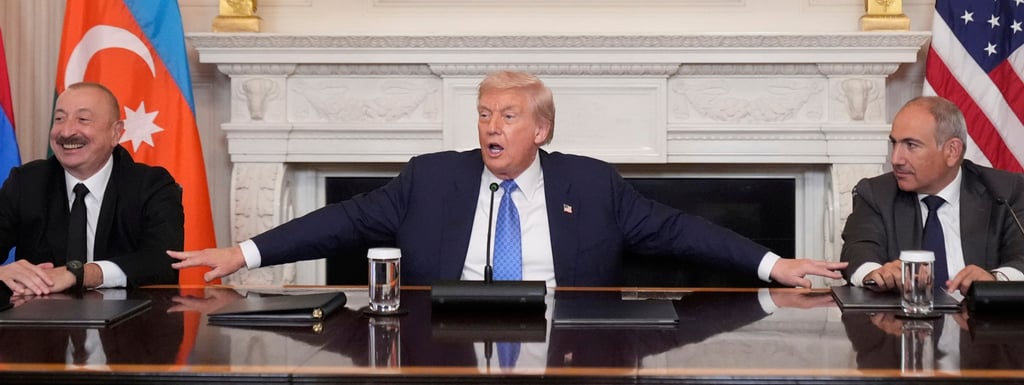
Briefing journalists, a White House official said “the losers here are China, Russia and Iran”.
Advertisement
Eurasia experts, however, said that the deal was not viewed in such binary terms by Armenia and Azerbaijan.
Advertisement
Select Voice
Select Speed
1.00x