Advertisement
Japan
This Week in AsiaPolitics

Why Japan’s fighter jet future looks ‘more optimistic’ with Canada’s entry

Analysts say the move will be ‘a starting point’ for greater cooperation among like-minded partners amid concerns about US commitment

3-MIN READ3-MIN
3
Listen
A mock-up of the GCAP fighter jet on display at the Farnborough International Airshow 2026 in Farnborough, Britain, on Tuesday. Photo: EPA
Julian Ryall
Canada’s decision to join the next-generation Global Combat Air Programme (GCAP) as an observer has eased Tokyo’s fears over its fighter jet future, while Germany is also reported to be exploring membership of the project, which already involves Britain, Italy and Japan.

The moves could give fresh momentum to GCAP, a programme to develop a next-generation fighter that analysts say Japan sees as critical to replacing its ageing F-2 fleet and avoiding a gap in its air defences.

Tokyo has been frustrated in recent months by what observers describe as London dragging its feet on the fighter due to defence funding shortfalls, a delay that could push back the project for several years.

While the aircraft’s introduction mattered less to Britain, given its existing air capabilities, analysts said any postponement in deployment could leave a significant gap in Japan’s defences.

Besides giving the programme fresh impetus, the arrival of additional partners has also underlined how other Nato member states and like-minded Indo-Pacific nations view US President Donald Trump’s administration as an unreliable defence partner, with new military partnerships being struck as a result.
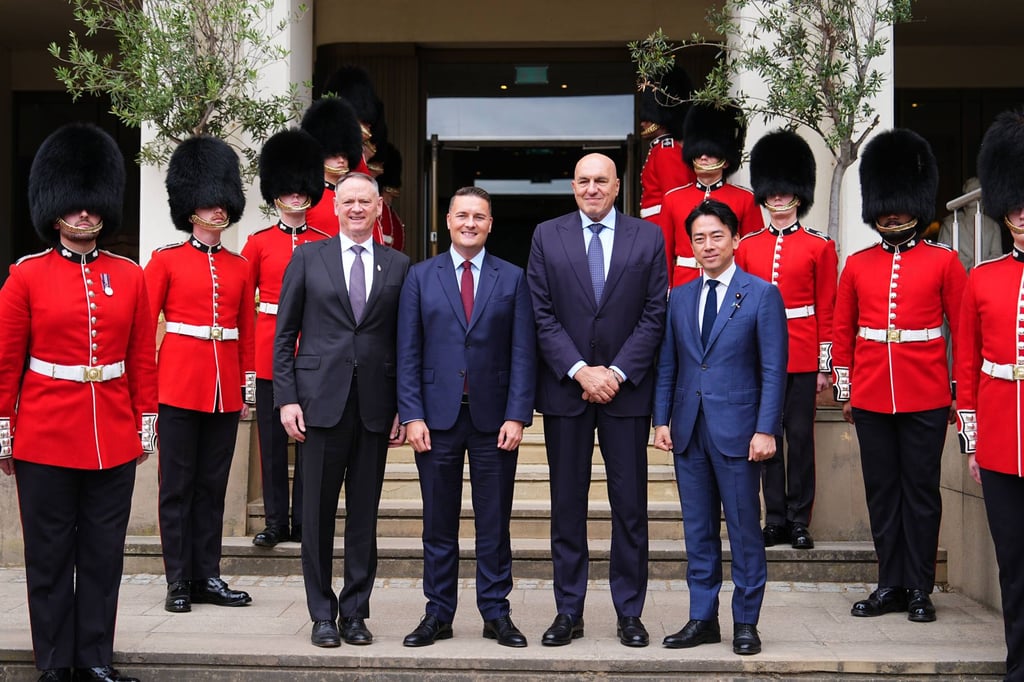
The defence ministers of Canada, Britain, Italy and Japan pose for a family photo at the Global Combat Air Programme at Wellington Barracks in London on Tuesday. Photo: Aaron Chown/PA Wire/dpa

“Tokyo is going to feel more supported on the project and optimistic that it is going to get off the ground,” said William Yang, a Taiwan-based analyst for the International Crisis Group.

Advertisement
Select Voice
Select Speed
1.00x