Dish in focus: Iberico pork three-ways at Whey
Chef Keith Teo gives Singapore’s bak kut teh a polished new form in the Iberico pork three-ways: a tender pork rack, slow-braised belly and house-made sausage

Conceived as “a sophisticated homage” to the pork rib bak kut teh, Whey’s Iberico pork three-ways is head chef Keith Teo’s reimagining of a Singaporean classic by bringing together tender Iberico pork rack, slow-braised pork belly and home-made sausage.
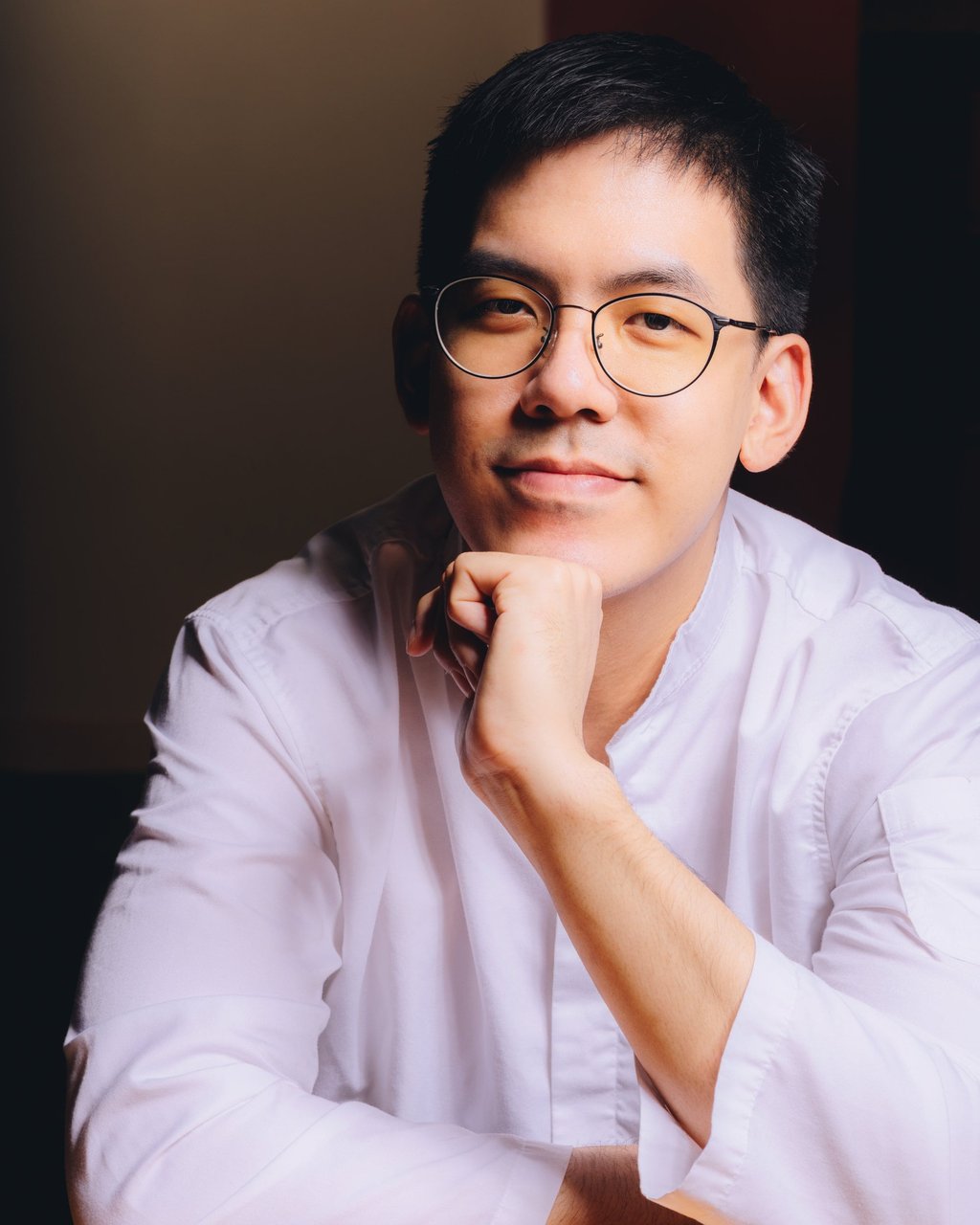
Crafting dishes that are rooted in hometown flavours but sharpened with French technique and a lighter, more contemporary touch, Teo arrives with more than five years of French culinary experience, including time at three-Michelin-starred Odette in Singapore, and one-Michelin-starred Frog by Adam Handling in London.
The Iberico pork three-ways is perhaps the clearest expression of that evolving identity. A classic bak kut teh’s appeal lies in its broth and accompanying side dishes, and Whey translates the same peppery, aromatic comfort into a plated main course that still feels familiar to Singaporean and Malaysian diners.
Teo says the dish was built around the desire to create something that would make diners immediately think of Singapore. The pork rack is the centrepiece, glazed in sweet star anise and cinnamon, then set over onion soubise infused with white peppercorns. Meanwhile, the sausage on the side folds in preserved vegetables and shiitake mushrooms, echoing the condiments often served alongside the soup.
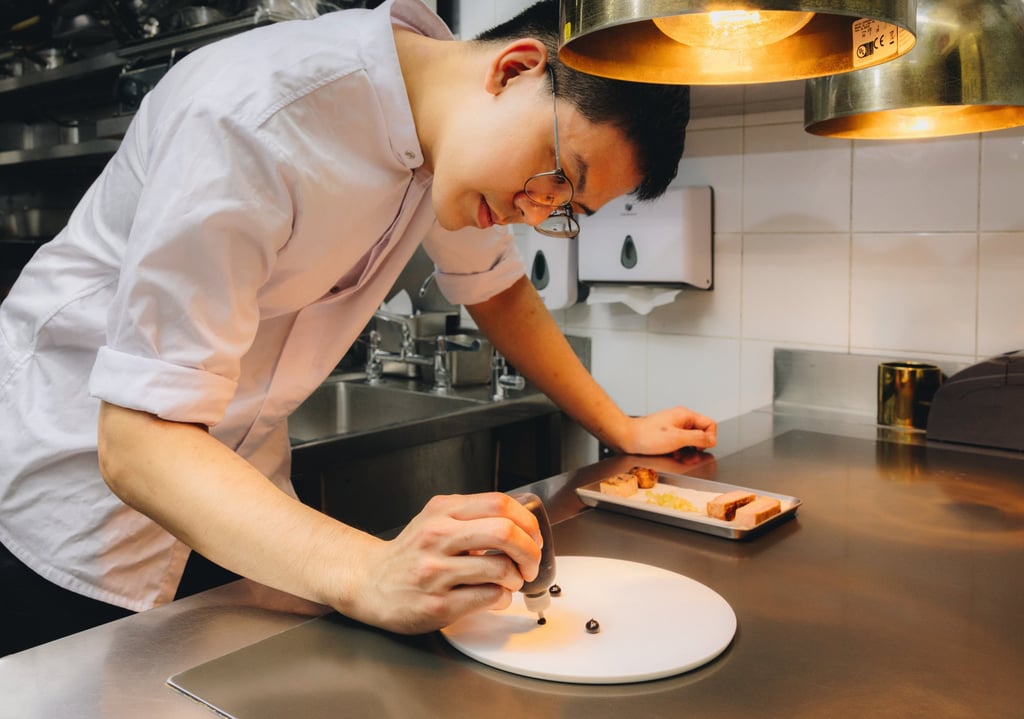
His approach to the dish also reflects the practical realities of fine cooking. The pork rack is aged, brined and cooked to order so the meat stays tender, while the pork belly goes through an even longer process: salted overnight, cooked for 48 hours, pressed overnight again and then finished on the grill just before serving.
The sausage mix is made in advance, wrapped individually in pork caul fat and cooked to order before being glazed with a spiced sauce. None of it is especially showy, but that’s the point. The kitchen uses intense heat on both grill and pan to bring out the charred, smoky notes familiar to Asian cooking, giving the dish its depth without overpowering the meat itself.