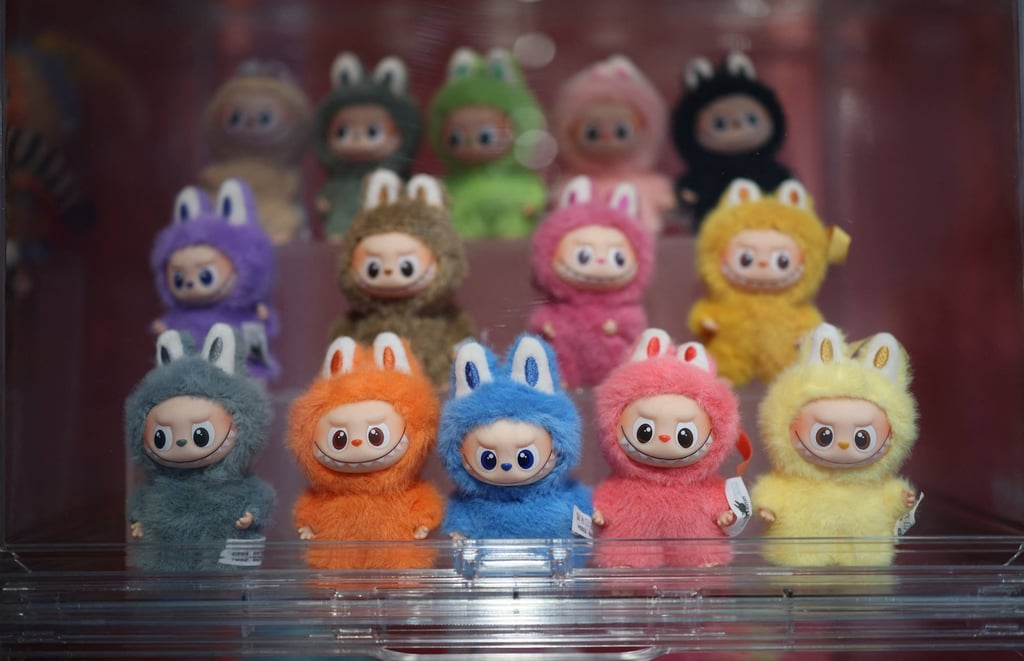
Is the Labubu trend over – and could Pop Mart’s Twinkle Twinkle take its place?

Labubu dolls have been all the rage, but experts project that the trend may be on the verge of collapse – like the Beanie Babies before them
The hype over the sharp-fanged monster dolls is about to peak, and doubts about the next sales driver for owner Pop Mart suggest its shares have limited upside, said Melinda Hu, a senior research analyst for Asia consumer stocks at Bernstein in Hong Kong.
The golden era of Pop Mart shares may already be over. The company’s Hong Kong-listed stock has dropped more than 30 per cent from its high in August, with some of the losses taking place after an employee was heard questioning the price of one of its blind-box products during a live-streaming event. The pullback has come after a rally that saw shares surge more than 1,500 per cent from the start of last year to their August high.
No fewer than 42 of the 46 analysts covering Pop Mart still have a “buy” or equivalent rating on Pop Mart, and three others label it a “hold”, according to data compiled by Bloomberg. The shares have fallen about 25 per cent since Hu initiated her coverage of the Beijing-based toy firm with an “underperform” rating on October 16.
Hu, who has worked at Bernstein for about seven years, currently covers 10 companies including ANTA Sports and Shiseido Co. Investors who followed her recommendations would have made an average loss of 5 per cent over the past six months, compared with an average decline of 2.7 per cent for her peer analysts, data compiled by Bloomberg show.

Trader positioning shows rising doubts over Pop Mart’s near-term performance. So-called short interest in the stock as a percentage of its total free float climbed to 2.8 per cent as of Thursday, the highest level since April 2024, according to data from S&P Global.
Beanie Babies, a range of animal-shaped plush toys stuffed with plastic pellets, boomed in value during the late 1990s until they came to be considered a financial investment. The bubble burst around 1999, and the toys, created by unlisted company TY, are now mostly worthless.