The UN’s World Food Forum is building a new generation of changemakers
Flora Igoe of the Youth Culture Programme is mobilising young chefs to safeguard food heritage and drive agrifood systems transformation

At the World Food Forum (WFF), a United Nations-backed platform where gastronomy bridges cultures and drives agrifood systems transformation, Flora Igoe leads the Youth Culture Programme. Based in Rome at the Food and Agriculture Organization (FAO), she guides young chefs in safeguarding intangible food heritage – family recipes, ancient farming practices and time-honoured techniques – while connecting their work to the UN Sustainable Development Goals.
“Food often creates connections between young people that go beyond what structured programmes alone can achieve,” Igoe says ahead of her keynote speech at this year’s International Gastronomy Forum Macao. “When young people from different parts of the world come together around food, as we’ve seen through the WFF Young Chefs Programme, the conversation shifts from theoretical practice to personal reflections. These, in turn, complement formal knowledge exchange.”
The gastronomy stream culminates in the WFF’s annual flagship event at FAO headquarters, where young chefs present regional treasures, from Amazonian forest yields to Asian ferments. In 2024, Igoe launched Sustainable Gastronomy Week, pairing meals with discussions on resilience and biodiversity. Her tenure, which began in August 2025, following earlier roles as Youth Culture Specialist curating artist-chef exhibitions, has mobilised nearly 30,000 leaders across 180 countries. Under her guidance, the network has fostered more than 500 innovations and grown to 62 National Youth Chapters, with 38 established since she took the helm.
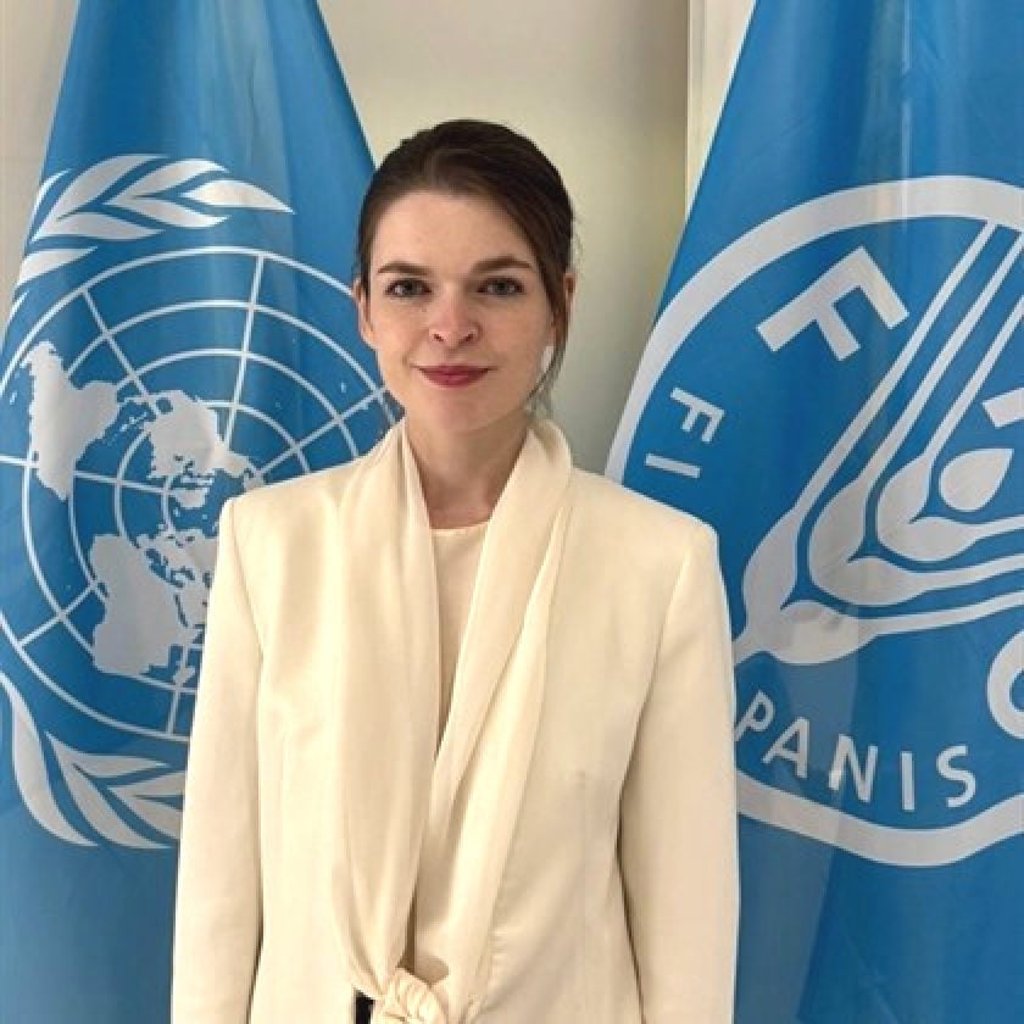
“When young chefs from different regions begin sharing how their local food traditions connect to broader questions of nutrition, biodiversity and food security, their perspectives shift in genuinely meaningful ways,” Igoe explains. “This human dimension is something we actively build on. Food gives young people the confidence to represent their communities and advocate for agrifood systems transformation.”
Igoe points to chef and food writer Eniola Okeola’s Nigerian project to help illustrate her point. Okeola set out to address a striking paradox: Nigeria is the world’s largest producer of shea butter, yet the ingredient is largely absent from urban kitchens. Imported oils dominate, while indigenous fats – deeply tied to the livelihoods of rural women producers – are either unknown to younger consumers or dismissed as cosmetic products.
Okeola’s response combined field research in shea-producing communities, chef collaborations at urban pop-up events, and social media advocacy. Framed around market development and nutritional awareness rather than cultural preservation alone, her work aims to restore shea butter to its place in Nigerian kitchens, strengthening both local diets and the livelihoods of the women who produce it.
Macanese cuisine was shaped by centuries of encounter and exchange … The role of young chefs in a City of Gastronomy context is to be part of that continuum
Igoe emphasises that evolving from artisan to agent of influence requires technical skill – but not only that. “What enables young chefs to leverage these skills is the ability to understand agrifood systems more broadly,” she says, citing knowledge of ingredient origins, producer networks and wider questions of nutrition, biodiversity and sustainability. “For young chefs to make a lasting contribution, we encourage them to pair that knowledge with a clear voice – the ability to communicate meaningfully to a diner, a community or a policymaker – and a commitment to making their practice both socially motivated and economically viable.” The kitchen, she adds, “is where agrifood systems transformation becomes visible and tangible.”
Igoe identifies three critical gaps for young professionals: the link between food heritage and biodiversity – when a traditional dish disappears, it often takes with it the local crop variety or farming practice that sustained it; the vulnerability of small-scale producers; and the lack of youth employment pathways in food and agriculture. She encourages young chefs to address these issues through sourcing choices, building direct relationships with producers, and making food and beverage careers genuinely viable for the next generation.
“Macau is a particularly good example,” Igoe notes. “Macanese cuisine was shaped by centuries of encounter and exchange, drawing on culinary traditions from Portugal, China, Southeast Asia, Africa and beyond. The role of young chefs in a City of Gastronomy context is to be part of that continuum – building on the knowledge of older generations while contributing their own perspective and experience.”

Through her work, she sees this principle in action. “Participants apply sustainability principles within large-scale hospitality environments, engage with local food heritage through menus and sourcing decisions, and use gastronomy as a platform to connect communities.”
Looking ahead, Igoe measures success in lasting ripples. “Success would mean a generation of culinary professionals who have used their skills, networks, platforms and long-term projects to drive meaningful change – in their communities, in the businesses they run or work within, and in the policy conversations that shape agrifood systems,” she says.
“It would also mean the models we are developing – community-based projects, mentorship structures and inter-regional knowledge exchange – have been tested, refined and scaled globally.” Concretely, that might look like young chefs contributing to national food policies, supporting local biodiversity through their food enterprises, or mentoring the next generation to follow their lead.