Advertisement
Opinion
For Chinese firms going out, global success requires truly ‘going in’
Beyond great products and service, building a trusted brand requires Chinese firms to integrate into, not just occupy, foreign markets
3-MIN READ3-MIN

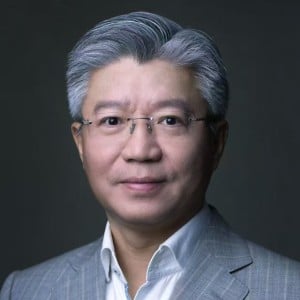
Lu Xiongwen is dean of Fudan University School of Management in Shanghai.
Chinese companies are accelerating their global expansion, driven primarily by two forces. The first is technology. Amid tightening restrictions in the West, especially the United States, many Chinese firms struggle to access critical technologies, equipment, industrial software and even raw components. Without breakthroughs, China’s manufacturing risks a long-term decline.
A growing number of scientists, engineers and executives have taken the leap into entrepreneurship, often developing “me too” or “me better” products as import substitutes. Faced with the limits of domestic demand, however, companies are being pushed overseas for scale and survival.
In theory, they should feel welcome abroad due to their cost-effective solutions. But their motives are often met with suspicion amid geopolitical tensions. The European Union, for instance, has tightened its screening of foreign investment, a move seen as targeting Chinese companies in sensitive sectors such as artificial intelligence and semiconductors.
Advertisement
The second driver behind Chinese firms going global is their repositioning in supply chains. Many small and medium-sized companies act as suppliers to multinationals. As these supply chains shift and restructure, those who fail to keep up risk being left behind.
In a sense, Chinese companies are being pushed overseas by dual challenges: razor-thin margins from cutthroat domestic competition and an over-reliance on foreign orders. For many, overseas expansion is the only viable path.
Advertisement
This supply chain-driven globalisation faces growing scrutiny. Western nations, led by the US, are not only tracing the origins of imports but also tracking investment sources. For Chinese companies, the key challenge lies in how to climb higher in the value chain.
Advertisement
Select Voice
Select Speed
1.00x