Robert Rauschenberg’s Asian travels and influences, on display at M+ in Hong Kong
Decades before the art world went global, Rauschenberg forged deep ties across Asia – a journey now traced in a landmark new show

Before the art world went global, there was American artist Robert Rauschenberg. The titan of 20th-century art spent decades looking East. Now, M+ is staging the first major exhibition dedicated to his travels across Asia, showing how formative the continent was for one of art’s experimental greats.
Opening on November 22 and continuing until April 26, 2026, “Robert Rauschenberg and Asia” offers a fresh, multidisciplinary exploration of an artist we thought we knew or may have taken for granted.

Rauschenberg (1925-2008), who was based in New York for much of his life, was one of the leading figures of the pop art movement, with a career that spanned almost six decades. Best known for blurring the boundaries between painting and sculpture, Rauschenberg famously used everyday objects, from car tyres and quilts to street signs, in his “Combines” series of works (1954-64), influencing generations of artists.
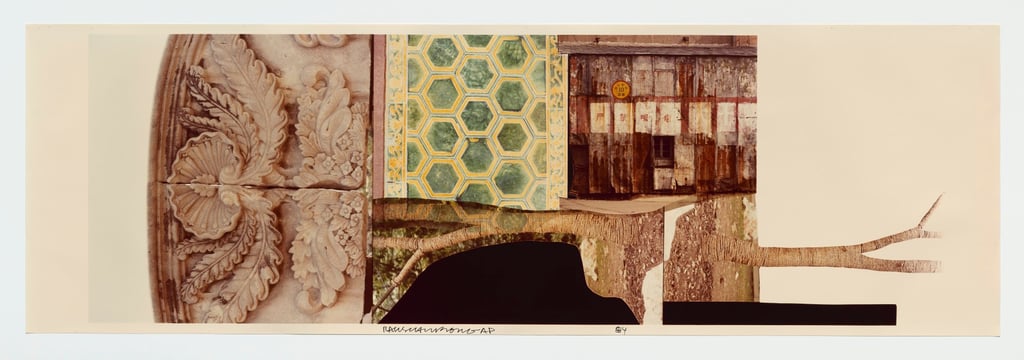
The first part of the exhibition explores his legendary 1964 Tokyo performance and an experimental project with a ceramics company in Shigaraki in the 1980s. During his pivotal 1975 visit to India, Rauschenberg worked with a paper mill at Mahatma Gandhi’s ashram in Ahmedabad, an experience that cemented his view of art as a social connector, not just an object in a gallery. Look out for pieces from his “Unions” and “Jammers” series, which directly resulted from these intercultural exchanges.